KARACHI: There are two million people in Karachi suffering from mental, emotional, intellectual or social adjustment disorders, says a senior psychiatrist.
And 300,000 of them are in need of urgent psychiatric / psychologist attention and are likely to become a permanent burden on society if not taken care of.
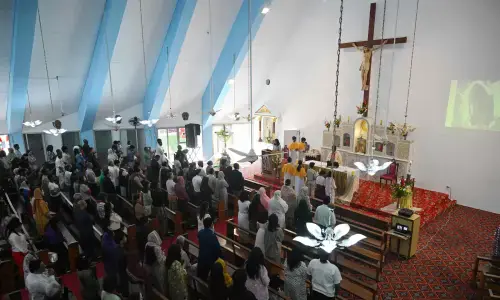
Pakistan Association for Mental Health president Dr S. Haroon Ahmed shared these stats at a discussion on De-stigmatizing mental illnesses organised by the PAMH at the Arts Council on Saturday evening.
According to a 2007-09 survey, every fourth house has a psychosomatic or psychiatric problem
“Every second house in Karachi has one or more persons taking tranquilisers. Every fourth house has a psychosomatic/psychiatric problem and masked depressive disorder,” Dr Ahmed said, while citing data from a PAMH survey of mental health between 2007 and 2009.
The current prevalence of mental illness in Pakistan, he pointed out, was estimated to be over more than 34 per cent of the population. A large number of these patients, however, remained deprived of treatment mainly because of the stigma attached to mental illness.
“Stigma is a major impediment to accessing appropriate care by individuals with mental illness,” he said, emphasising the need for addressing what he described as grey areas of psychiatry as well as masked depression, often presented with varying symptoms.
The prevalence of schizophrenia, he said, was only one per cent but all psychological, emotional, psychosomatic conditions and even intellectual deficit were lumped as ‘dangerous mental illness’.
Talking about the PAMH campaign Salman Ki Kahani, he said that it would help people understand mental health issues through animation.
Human rights advocate I.A. Rehman talked about how common mental illnesses were in society and often people had no realisation that they actually suffered from them and required treatment.
He underscored the need for changing social attitudes towards mental illness and said that awareness should be created that mental illnesses were treatable diseases.
Senior journalist Zubeida Mustafa regretted weakening human interactions and family bonds as the use of social media was on the rise. The lack of understanding and sensitivity in relationships, in her opinion, also led to mental illness.
She urged the PAMH to create awareness and promote the idea of getting together. It’s not just mental illness which the society looked down upon but various diseases in the past had been treated in the same negative way.
Director Hum Network Sultana Siddiqui shared that how things had changed over the time on the state-run TV which once didn’t allow discussion on diseases related to breast and uterus.
The media, she said, should take up serious subjects and present them in a way that people could understand it.
Highlighting a host of issues workers face in the country, Karamat Ali of Pakistan Institute of Labour Education and Research referred to surveys which showed that there was consistent reduction in workers’ salaries by 20 to 35 per cent every year as inflation rose.
“Eighty-three per cent of Pakistani households earn $2 per day. At places where men are getting Rs10,000 to Rs11,000, women are getting Rs6,000 to Rs7,000 for the same job,” he said, adding that people were being forced to cut down one of their meal and reduce expenses on medical treatment.
Senior journalist Ghazi Salahuddin lamented what he described as media’s obsession with politics due to which people were not able to see what’s actually happening in society.
He emphasised the need to promote literature and the habit of reading poetry, which had a therapeutic effect on human mind.
Writer and columnist Bina Shah spoke about sexual harassment which, she said, had a huge negative impact on women’s health. She emphasised the need for creating awareness on this subject and setting up mechanisms to register and probe such cases.
Journalist Zohra Yousuf and artist-cum-activist Shahid Risam also spoke on the occasion.
Published in Dawn, May 5th, 2019