Easter attack bombers travelled to 3 Indian states for 'some sort of training': Sri Lankan army chief


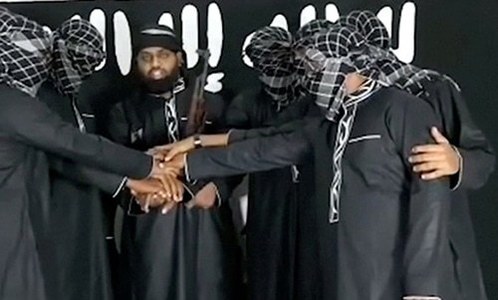
The Sri Lankan Army has, for the first time since the deadly Easter Sunday bombings, confirmed that the suicide bombers involved in the attacks had travelled to India "for some sort of training or to make some more links towards the other organisations outside the country".
“They (those involved in the attack) have gone to India, they have travelled to [Indian-occupied] Kashmir, they have gone to Bangalore, they have travelled to Kerala state. [That is] the information available with us as of now,” said Sri Lankan army chief Lt Gen Mahesh Senanayake during an interview with the BBC.
The development comes a week after Indian media citing a top military official had reported that the suspected mastermind of the attack, Mohammad Zahran Hashim, had spent a "substantial amount of time in south India".
Moreover, an unnamed security official had earlier told the Indian Express that intelligence agencies were tracking more than a dozen suspects from Tamil Nadu and Kerala whose phone numbers were found in Hashim's call records.
When asked whether it could be gleaned from the information available that the attacks were plotted inside Sri Lanka or if there is evidence that the attacks were coordinated centrally by figures inside the militant Islamic State group in Syria, Senanayake said: "Looking at the pattern of operation and the places that the leadership has travelled [...] so there has to be some outside involvement of some leadership or instructions."
The army commander acknowledged that there had been some information and intelligence sharing issues, saying the "military intelligence wanted to go in a different direction and the others wanted a different [direction] and there was a gap which everyone can see today".
When asked who then could be blamed for the failure to share intelligence, Senanayake said: "I believe that everybody who is responsible for intelligence gathering and preparation of these plans, who are responsible for the national security, are to be blamed, including the political hierarchies."
He suggested that negligence in security matters was the reason Sri Lanka was attacked. "Too much of freedom, too much of peace for the last 10 years. People forget what happened for 30 years. People [were] enjoying peace and neglected security," he said.
Senanayake gave an optimistic response when asked whether he could "confidently say to people around the world that Sri Lanka is a safe place for international tourists".
"Sri Lanka is a country which fought for 26 years. The cases we faced at that time [were] more difficult, and [involved] more terror than what we are facing today.
"We are deployed on the ground to give confidence to the public and ensure there is no violence or escalation of communal riots in this country. I have trust [in] the armed forces and the police of this country to bring normalcy [as] soon as possible," he said.