JAKARTA: Indonesian President Joko Widodo has won a second five-year term, preliminary election results showed on Wednesday, in a victory for moderation over the nationalistic rhetoric of his rival, Prabowo Subianto.
Vote counts from five independent survey groups showed Widodo with a clear lead over Subianto, a general during the era of the Suharto military dictatorship who warned Indonesia would fall apart without his strongman leadership.
The so-called “quick counts” from reputable survey organisations that use a sample of polling stations have been reliable in past elections. With an average of 80pc of sample polling stations counted, the five survey organisations showed Widodo winning 54-56pc of the vote, a modest improvement on his 2014 showing.
Indonesia, the world’s most populous Muslim-majority nation, is an outpost of democracy in a Southeast Asian neighbourhood of authoritarian governments and is forecast to be among the world’s biggest economies by 2030. A second term for Widodo, the first Indonesian president from outside the Jakarta elite, could further cement the country’s two decades of democratisation.
Addressing jubilant supporters a few hours after polls closed, Widodo said he was aware of his lead and called for the nation to reunite after the divisions of the campaign.
“From the indications of the exit poll and also the quick counts, we can see it all, but we must be patient to wait for the official counting from the Election Commission,” he said.
Subianto, who also lost to Widodo in the 2014 presidential election, had not yet conceded defeat. He said his campaign’s exit poll and quick count showed that he had won but urged his supporters not to cause chaos.
His campaign team has alleged massive voter list irregularities, but analysts say the claims are absurd and designed to undermine the election.
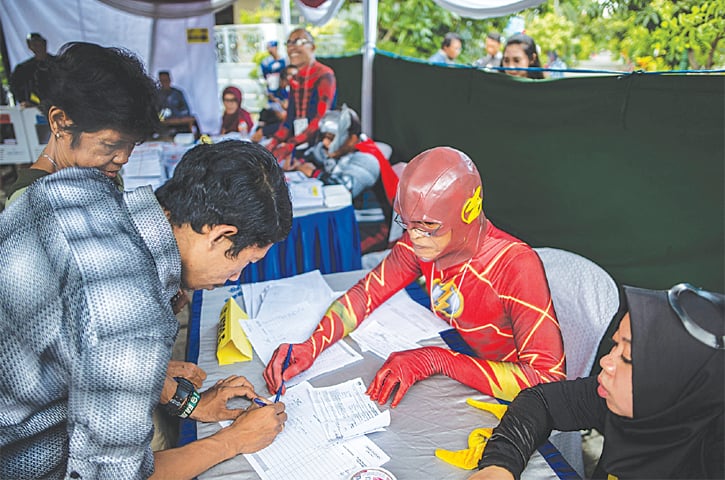
The balloting was a huge logistical exercise with 193 million people eligible to vote, more than 800,000 polling stations and 17 million people involved in ensuring the polls ran smoothly. Helicopters, boats and horses were used to get ballots to remote and inaccessible corners of the archipelago.
Published in Dawn, April 18th, 2019