UNSC urges Taliban to call off spring offensive


 10
10


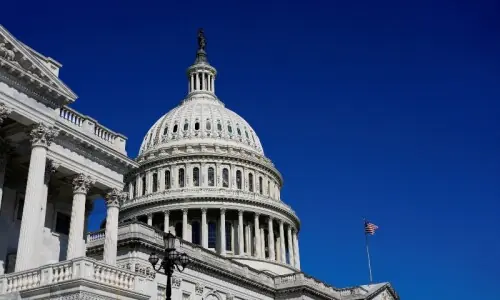
WASHINGTON: The UN Security Council has unanimously condemned the Taliban’s spring offensive, saying the move will “only result in more unnecessary suffering and destruction for the Afghan people”.
The Taliban launched their annual offensive on the battlefield on April 12, days before the scheduled resumption of talks in Doha, Qatar.
Also read: Taliban say they are not looking to rule Afghanistan alone
If the launch of the offensive was not bad enough, the militants strongly objected on Wednesday to the unusually long list of delegates drawn up by the Afghan government for the reconciliation talks.
Intra-Afghan talks in trouble as militants object to an unusually long list of delegates
In Washington, US Special Representative for Afghanistan’s Reconciliation Zalmay Khalilzad reminded the Taliban that the international community had spoken “in unison on this point” and now it was time for the militants to heed such calls and cease fire.
In a joint statement issued in New York on Tuesday, the 15-member UNSC urged “all parties to the conflict to seize the opportunity to begin an inclusive intra-Afghan dialogue and negotiations that result in a political settlement”.
“As the UN statement also makes evident, it’s long past time for the war and violence to end, a ceasefire to be put in place, and dialogue & negotiations to begin,” Mr Khalilzad wrote in a tweet. “For any party to oppose these objectives is to be on the wrong side of history.”
So far, the Taliban have held six meetings with a US team, headed by Ambassador Khalilzad, but are reluctant to hold direct talks with the Afghan government.
Earlier this month, the United Nations granted a waiver to 11 senior Taliban leaders, allowing them to travel and take part in peace talks with the United States to end the 18-year-old war in Afghanistan.
In their joint statement, all 15 UNSC members recognised the Afghan people’s strong desire for sustainable peace in Afghanistan and reminded the militants that “more fighting will not advance the goal of making a sustainable peace”.
UNSC members also reiterated the importance of an inclusive Afghan-led and -owned peace process for the long-term prosperity and stability of Afghanistan, and expressed their full support for the Afghan government’s efforts to that end.
The members noted that as mandated by the Security Council, the United Nations Assistance Mission in Afghanistan and the special representative of the secretary-general stood ready to support the Afghan-led and Afghan-owned peace process, if requested by and in close consultation with the Afghan government.
Govt delegates
The militants have criticised Kabul’s plan to send as many as 250 delegates to the so-called intra-Afghan talks, adds AFP.
President Ashraf Ghani’s administration had announced on Tuesday a long list of people from all walks of Afghan life, including some from the government, that it wanted to send to the dialogue in Doha this weekend. But the Taliban poured scorn on the lengthy list, saying it was not “normal” and that they had “no plans” to meet so many people.
“The creators of (the) Kabul list must realise that this is an orderly and prearranged conference in a far-away Khaleeji (Gulf) country and not an invitation to some wedding or other party at a hotel in Kabul,” Taliban spokesman Zabihullah Mujahid said in a statement.
The Taliban — who see Mr Ghani as a US stooge and his government as a puppet regime — also insisted they would not be negotiating with Kabul at the conference, and any administration officials were involved merely in a “personal capacity”.
Further doubts were cast when some of those Mr Ghani said would attend the conference announced they would not go.
His own running mate Amrullah Saleh, the former head of Afghan intelligence, was among them. The Taliban “should agree to direct & focused negotiations with the Afghan government”, he tweeted.
Atta Mohammad Noor, a former governor of Balkh province, had also been included on the list, which was meant as an inclusive representation of Afghan society. But Mr Noor slammed the delegation as politically biased towards Mr Ghani.
Published in Dawn, April 18th, 2019