People urged to use right to information for govt’s accountability


 0
0


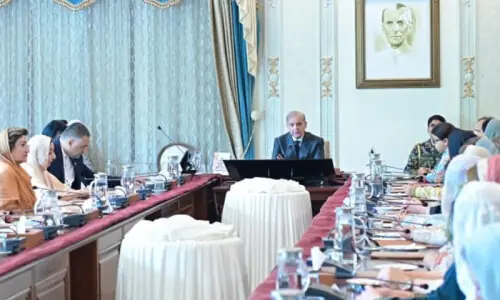
KARACHI: Teachers and workers from the education and health departments as well as librarians and councillors gathered to attend a workshop titled ‘Improving public service delivery through Right to Information (RTI)’ organised by Shehri-Citizens for a Better Environment in collaboration with Friedrich Naumann Foundation Pakistan at a hotel here on Wednesday.
At an earlier RTI workshop held last month, Shehri was informed that there is not a single woman UC secretary in the 209 union committees of six districts of Karachi. The workshop on Wednesday was organised to inform and educate women about the Sindh Transparency and the Right to Information Act 2016, Article 19-A and the history of the RTI.
‘When there is no news, people make up false news which causes unrest in society’
Expressing concerns over delays in the complete implementation of the Sindh Transparency and Right to Information Act 2016, the speakers said that it was necessary to ensure access to information for accountability of the government. It was discussed that RTI supplements the core value of a democracy by ensuring the fundamental rights of citizens as well as other rights enshrined in the Constitution.
In case of deliberate obstruction of the RTI law, a fine which may extend up to 10 per cent of the basic pay may be imposed on the accused official by the Information Commission under Article 15(1). It may also lead to three-month imprisonment.
“When there is no news, people make up false news which causes unrest in society, therefore it is incumbent upon the government to ensure proactive disclosure of information to prevent any misinformation from spreading among the masses,” said Sindh Information Commissioner Sikandar Ali Hullio.
Hullio further said that the citizens have the responsibility to exercise their fundamental right of access to information and show their concern over matters of governance.
Amber Alibhai, the general secretary of Shehri, informed the participants about the necessity of proactive disclosure of information under Article 6(1) of the Sindh Transparency and Right to Information Act 2016, as well as the right to access of information being a fundamental universal right necessary for economic empowerment and the fulfilment of other human rights.
“Women are often uninformed about their constitutional rights which inhibit them from exercising their power to address issues faced by them in their daily lives. RTI empowers every citizen to question the government regarding issues through a legal process which is also cost-free,” she said while stressing that women who make up about half of the population of Pakistan should be more involved with the local government to keep them on their toes.
Shehri’s Sameer Hamid Dodhy elaborated the key points in his presentation on the Sindh RTI law. He said that one of the best features of this act is the provision for proactive disclosure, which calls upon departments to disclose information on their websites and through other mediums.
“Shehri has developed an android application, named ‘RTI Sindh Shehri’, which is available for download on Play Store, which outlines all the key elements of filing an RTI request, the law itself, list of government departments, and the history of the law. It is available for use by the public,” he said.
Advocate Tariq Mansoor said that the government cannot withhold information unless it falls under the exception clauses of the Sindh RTI law. He added that women working with the government should not shy away from exercising their constitutional rights, even if it required complaining against senior officials who prevent them from disclosing information that may serve public interest.
Earlier, Amra Javed, executive member of Shehri, provided background about her organisation and requested the people to actively question the performance of the government through legal channels to promote transparency and good governance.
Published in Dawn, April 4th, 2019