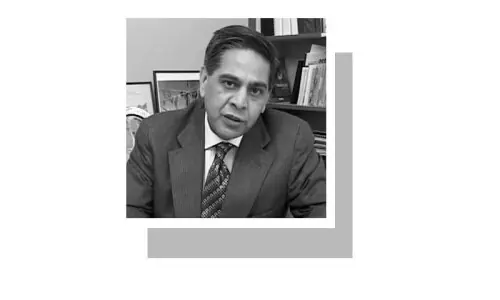
Finance secretary warns of sanctions over FATF non-compliance


 26
26


ISLAMABAD: The federal secretary of the finance division on Tuesday warned that Pakistan might face economic sanctions over non-implementation of Financial Action Task Force (FATF) recommendations.
Talking to reporters after attending a meeting of a sub-committee of the Public Accounts Committee (PAC), Finance Secretary Arif Ahmed Khan said Pakistan had to take strict measures to implement the FATF recommendations.
Take a look: Alone at FATF
He said that the country had to proceed against the banned outfits in the light of FATF recommendations. He expressed apprehensions that Pakistan might face economic sanctions if the FATF recommendations were ignored and not implemented.
The International Cooperation Review Group (ICRG) of the FATF that reviewed Pakistan’s action plan in recent meetings was not satisfied with the progress on milestones set for January 2019. This was despite improvements in the anti-money laundering and combating the financing of terrorism (AML/CFT) regime and integrated database for currency declaration arrangements.
It expressed concern over Pakistani authorities’ inability to demonstrate why they considered eight proscribed entities to be low risk as opposed to the high-risk view of the Asia Pacific Group (APG) and ICRG.
Therefore, the FATF urged “Pakistan to swiftly complete its action plan, particularly those with timelines of May 2019” to address strategic deficiencies.
The FATF will undertake the next review of Pakistan’s progress in June 2019, which will be preceded by a face-to-face meeting with the Joint Group in May.
In June 2018, Pakistan made a high-level political commitment to work with the FATF and APG to strengthen its AML/CFT regime and to address its strategic counterterrorism financing-related deficiencies by implementing an action plan to accomplish these objectives. The successful implementation of the action plan and its physical verification by the APG will lead the FATF to clear Pakistan out of its ‘grey list’ or move it into the ‘blacklist’ by September.
During the meeting of the PAC sub-committee, audit officials said the finance division did not present the supplementary grant of Rs105 million in parliament. The committee was examining the audit paras of the finance ministry.
The Auditor General office briefed the committee on 16 supplementary grants of the finance division for 2016-17. The committee expressed displeasure over the anomalies in the financial accounts of government sector institutions. The finance secretary said he had been witnessing such deficiencies for over two decades. Syed Naveed Qamar, a PAC member, expressed the hope that such mistakes would not be repeated in the next fiscal year.
Published in Dawn, March 6th, 2019