Potato glut shows how small-crop farmers are suffering


 1
1
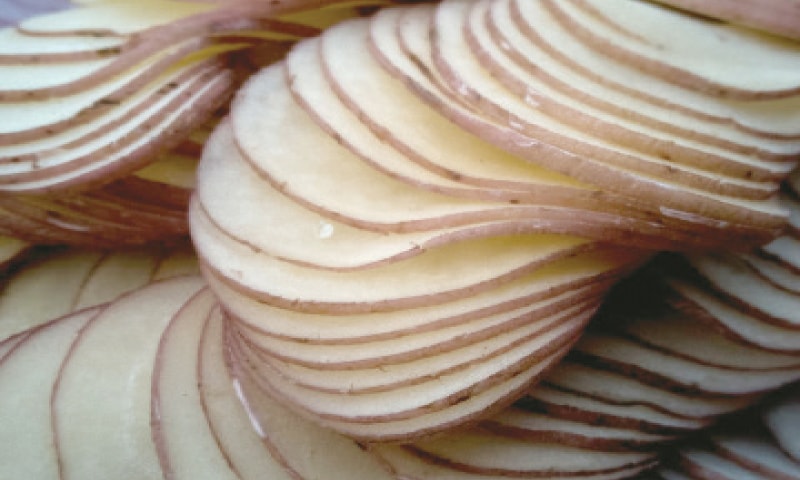

This year’s potato glut has once again exposed how vulnerable our growers of small crops are to market forces.
When a Karachi-based superstore offered potatoes for Rs2 per kilogram to lure customers in mid-February, many thought it was a typo. However, it turned out that the store was really selling potatoes at that rate. It is a separate story, though, that it doubled the rate after a few days — and began selling the same potatoes after 10 days for Rs70 per 5kg bag. The same superstore, as part of a sales promotion deal for customers, had also offered other vegetables at unbelievably low prices: 2kgs of cabbage, for example, were available at a token price of just Re1.
Apart from the dark secrets of mega marketing schemes of our superstores, the fact that stands out here is this: the potato crop has been large and, with sufficient carryover stocks of the past year, the market is witnessing a potato glut. The same is not true for all other vegetables. But generally speaking, supplies of some of other vegetables have also exceeded demand. So their prices have crashed.
Larger production of vegetables has, meanwhile, resulted in 41 per cent increase in export volumes and 9.8pc growth in foreign exchange earnings in the first seven months of this fiscal year, according to the Pakistan Bureau of Statistics.
The absence of a modern system to ensure fair play in markets of perishable items creates erratic patterns of small-crop production
In July-January, Pakistan exported more than 507,000 tonnes of vegetables, up from 359,000 tonnes in the year-ago period. Export earnings, however, rose to just $115.5 million from $105.2m. But within this group, exports of potatoes have not increased, thus deepening its glut. But potato exports are yet to pick up pace as the country has exported only about 250,000 tonnes of them in the last seven months.
According to recent media reports, this year’s crop size is huge — 4.5m tonnes — against the maximum projected domestic consumption of 3.75m tonnes.
However, regardless of a few sales promotion schemes being offered here and there, a vast majority of the consumers of vegetables gets little benefit of the price crash. They have got some benefit only in the case of potatoes whose market prices range between Rs15 and Rs20 per kg in most of Karachi markets, down from the last year’s Rs25-Rs30 per kg.
It is difficult for consumers to realise how our potato farmers have suffered this year with the wholesale prices not even covering half of their cost of production.
The problem with our food crops is that for decades the country’s political elite has pampered wheat and sugar cane crops, paying little attention to equally important two other major crops — rice and maize — and neglecting almost all minor crops, including pulses, oilseeds and vegetables. Successive governments have spent hundreds of billions of rupees in subsidies on wheat and sugar cane for cultivation and production of the crops and local and foreign sales of wheat grains or sugar.
Not a fraction of that amount has been spent on the promotion of minor food crops.
Another problem is that in the absence of a national action plan for promoting minor crops, inter-provincial coordination for the production of these crops has become difficult. Each province continues to facilitate cultivation of minor crops on its own depending upon local factors.
Every year, one or two minor crops experience a glut-like situation due to broken supply chains and lack of coordination in inter-provincial movements of these crops. Sometimes it is potato, sometimes tomato, sometimes cabbage or green or red chilli. Farmers of these crops get little or no support from the government and have to dump their produce at the rates that don’t even cover the cost of output.
As a result, those farmers switch over to other crops the next year. And if the switching over takes place on a mass scale, the country’s production of certain small crops falls short of its need the very next year or the year after. Unavailability of credible and timely data on the output of vegetables and other minor crops also makes the price discovery system difficult.
In addition to the factors responsible for making rationalisation of the crop size difficult and impeding the pace of diversification of our agriculture base, the absence of a modern system to ensure fair play in markets of perishable items also creates erratic patterns of production of small crops. The establishment of more and more wholesale vegetable and pulse markets in the districts where these crops are grown and the abolition of advance auctions of crops are the two things that must be done. Right now, most of the growers and small sharecroppers of minor crops sell their output to traders-cum-speculators at throwaway prices to repay loans or cover the cost of cultivation.
One reason for doing so is that there are not many wholesale markets within their own districts. In order to avoid the hassle and the cost involved in transporting their produce to faraway markets, they develop a permanent relationship with the traders. These traders lure them into selling their produce in advance at very low rates before the crops are ready. Once the crops are reaped, they transport them to main cities. Consumers in the main cities pay a lot more for vegetables not knowing that the growers sometimes get peanuts for their produce. Last year, many tomato growers in Sindh received not even a fraction of their cost of production.
Just read this paragraph from a Dawn story titled “Too many pitfalls, not enough profit” of Nov 12, 2018: “A few days ago, on a visit to the Dodo Soomro union council, we saw a small landholder flinging tomatoes in a nearby drain. When we enquired as to why he was doing so, he said that the rates were so low that he could not even afford to pay the cost of transport required to get the crop to market. He decided it would be better to just throw the produce instead.” — MA
Published in Dawn, The Business and Finance Weekly, March 4th, 2019