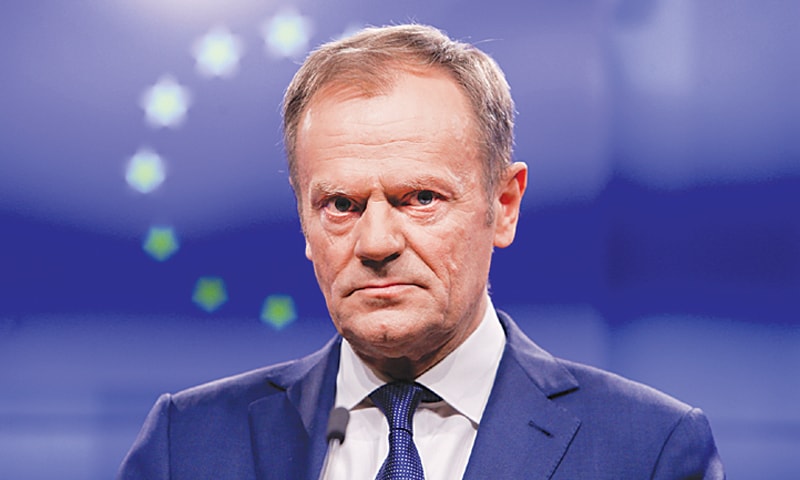
BRUSSELS: European Council President Donald Tusk took a swipe on Wednesday at some Brexit-backers in Britain, wondering aloud what “special place in hell” might be reserved for those who had no idea how to deliver the country’s exit from the European Union.
With less than two months to go until Britain is due to leave the EU and concern mounting about a potentially chaotic departure, Tusk, who chairs meetings of EU leaders, also appeared to dash any British hopes that the bloc would reopen discussions over the Brexit deal that was overwhelmingly rejected by UK lawmakers last month.
“I have been wondering what a special place in hell looks like for those who promoted Brexit without even a sketch of plan how to carry it out safely,” Tusk told reporters after talks with Irish Prime Minister Leo Varadkar.
As the men shook hands, Varadkar told Tusk “they will give you terrible trouble in the British press” over the comments which, as predicted, drew outrage from British Brexiteers.
House of Commons Leader Andrea Leadsom, a pro-Brexit Conservative, said Tusk’s remark was “pretty unacceptable and pretty disgraceful. ... it totally demeans him.”
Sammy Wilson of Northern Ireland’s Democratic Unionist Party tweeted that Tusk was a “devilish euro maniac ... doing his best to keep the United Kingdom bound by the chains of EU bureaucracy and control.” And former UK Independence Party leader Nigel Farage tweeted: “After Brexit we will be free of unelected, arrogant bullies like you and run our own country. Sounds more like heaven to me.”
Tusk a nd Varadkar said EU nations were intensifying their preparations for a ‘no-deal’ British exit a possibly disastrous development that could inflict heavy economic and political damage in the UK and the EU alike. “A sense of responsibility also tells us to prepare for a possible fiasco,” Tusk said.
Britain’s Parliament voted down May’s Brexit deal last month, largely because of concerns about a provision for the border between the UK’s Northern Ireland and EU member Ireland. The mechanism, known as the backstop, is a safeguard that would keep the UK in a customs union with the EU to remove the need for checks along the Irish border until a permanent new trading relationship is in place.
The EU, which has long regarded the Irish border as the thorniest issue in Brexit talks, is also adamant that the backstop can’t be removed. Tusk’s appearance alongside Varadkar was the latest signal that the bloc will not abandon Ireland, which fears both the economic and political impact of a hard border.
“We will not gamble with peace or put a sell-by date on reconciliation, and this is why we insist on the backstop,” Tusk said. “Give us a believable guarantee for peace in Northern Ireland, and the UK will leave the EU as a trusted friend.” Varadkar said Britain’s political instability “demonstrates exactly why we need a legal guarantee” about the border.
Published in Dawn, February 7th, 2019