‘Ambiguity of creative process is fascinating’


 0
0


KARACHI: A symposium on ‘curating cultures’ organised by ADA magazine and Habib University on Friday allowed the rather smallish but discerning audience to hear and see some intellectually stimulating presentations.
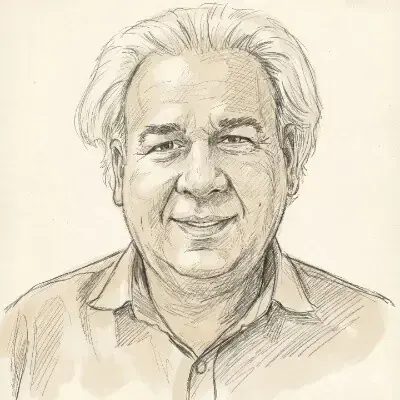
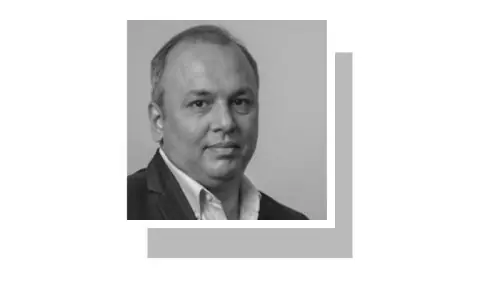
The first session was on creative processes. Former senator and federal information minister Javed Jabbar was the first speaker who named his talk ‘The creative process: a crystal-clear enigma’. Describing the process, he said it is crystal clear because a creative process requires effort, structure and discipline. At the same time [in terms of enigma] the ambiguity of the process is fascinating –– it’s complex, contradictory, compelling and comprehensive beyond painting, writing and composing music. We live a life of infinite beauty whose very genesis is creativity.
Mr Jabbar then, in reasonable detail, shed light on the elements of the creative process. The first one he said was silence, followed by observation, reading, listening, preventing the immediacy of mass media to engulf us, parallelism of three time periods (past, present, future), and juxtaposing two unrelated elements.
Mr Jabbar argued that technology has begun to encroach into our creative processes turning from an enabling force to a dominant one.
Technology has begun to encroach into our creative processes, symposium told
Iranian architect Zahra Taraneh Yalda’s topic was ‘Architect to activist’. She first showed a slide in which the line ‘Singing together for Tehran’ was written. Ms Yalda mentioned a group that she and her friends formed a couple of years back on social media to discuss the issues faced by their city, Tehran. Gradually the group became so powerful that it managed to make its voice heard by the powerful circles of the country.
“We liberated ourselves after the city council elections. The group discovered that we can talk and get together to start claiming the rights of the city, and protesting against what’s being done [against] it … The group, very softly, started becoming an influential power.”
Ms Yalda said it was a paradigm shift. It managed to influence small to large-scale projects. For example, there were so many cars in Tehran that walking in the city had become difficult. The group impressed upon the authorities to help people walk from one side of the walkway to the other, due to which the authorities took away fences that stood in the walkways. She also showed images of other projects that the group was able to turn in favour of the city.
Turkish architect Gonca Pasolar gave a presentation titled ‘The scent of trace’. She highlighted the company EAA (Emre Arolat Architecture) established in 2004 that’s “keen on conserving our ethos and spirit”. It believes in collaboration and creative patterns that are a hallmark of society. Another aspect that it focuses on is to “internalise the distinctive characteristics of different cultures.”
Ms Pasolar showed pictures of some of the projects that the company has undertaken over the years adding that apart from Istanbul the company has offices in London and New York.
After the presentations, Shahid Sayeed Khan joined the three speakers on stage as moderator of a panel discussion. His first and only question was: can creativity be taught? Mr Jabbar said, yes. You can teach yourself through experience but the “germs have to be in your genes.”
Ms Pasolar agreed with Mr Jabbar, while Ms Yalda said urban dialogue with people of a big city is a much more difficult exercise than one thinks.
The second session of the symposium was on interdisciplinary practices. Dr Davide Tomasso Ferrando from Italy gave a presentation on a project concentrated on inaccessible buildings that were turned into refurbished social housing opportunity at the Venice Biennale.
Dr Herve Matine from France informed the audience about the Poster for Tomorrow initiative. It started in 2009 as a campaign for freedom of expression and some other important issues at the time. In the span of 10 years, 38,944 posters have been exhibited in various parts of the world on 10 subjects. In the first year, the subject was ‘Freedom of expression’ in which 67 countries took part and 1,839 posters were displayed in more than 100 exhibitions in the world. Last year, the topic was ‘A planet for tomorrow’ with 3,900 posters coming from artists of 67 countries.
Sajida Vandal shared her views on the Institute for Art and Culture set up in Lahore. She said it was a daunting task because it was to be done keeping the postcolonial, 21st century environment in mind.
Published in Dawn, January 19th, 2019