Pompeo launches Mideast tour vowing no IS return


United States Secretary of State Mike Pompeo arrived in Jordan on Tuesday on a Middle East tour to show commitment to the region after President Donald Trump's surprise decision to withdraw troops from war-torn Syria.
The top US diplomat, on his longest trip since taking the post last year, pledged that the Islamic State group (IS) would not be allowed to regroup following a string of battlefield defeats.
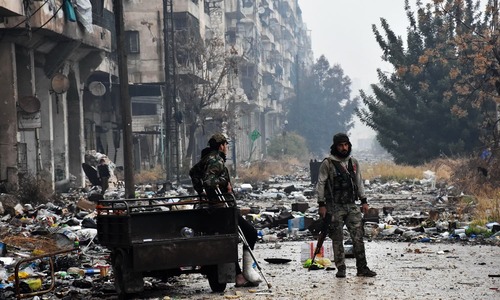
But in a stark reminder of the lingering threat, a war monitor reported that the jihadists had killed 23 US-backed fighters in a counterattack in eastern Syria aimed at defending their last bastion.
After setting off on the trip to eight Arab capitals, Pompeo told reporters he would show that "the United States is still committed to all the missions that we've signed up for with them over the past two years".
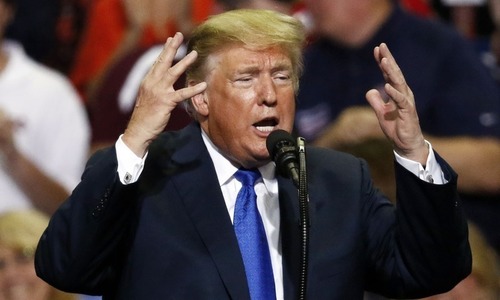
The eight-day tour comes weeks after Trump announced that the United States would quickly pull its 2,000 soldiers out of Syria, declaring that IS — also known as ISIS — had been defeated.
His advisers have since been walking back his timeline, with national security adviser John Bolton saying on Monday in Jerusalem that the United States would verify that the group is truly beaten before withdrawing.
Highlighting that IS emerged during the tenure of Trump's predecessor Barack Obama, Pompeo said the campaign to destroy the movement's self-styled "caliphate" in war-battered Syria has been "enormously successful".
"And I am confident that we will continue to ensure that the kind of rise that ISIS had under the Obama administration doesn't occur again," he said on his plane.
IS hits back
Just hours later the Syrian Observatory for Human Rights said IS suicide attackers had hit the US-backed Syrian Democratic Forces in eastern Syria, killing 23 of its fighters.
IS was unable to hold on to the positions it attacked but the assault which began late on Sunday killed 23 SDF members and also left nine jihadists dead, the Britain-based monitor said.
Pompeo opened his trip in Jordan and will deliver an address on Middle East policy in Egypt, whose army chief turned president, Abdel Fattah al-Sisi, has been a key partner of Trump.
He will also visit Manama, Abu Dhabi, Doha, Riyadh, Muscat, Kuwait City, and possibly Baghdad.
A major focus of the tour will be sustaining a regional coalition to counter Iran, the main enemy of US allies Saudi Arabia and Israel.
"This is a coalition that understands that the largest threats — terrorism and the Islamic Republic of Iran — are things that we ought to work on jointly and we will be marshalling all of the resources, theirs and ours, to achieve them," Pompeo said.
Last year, Trump pulled out of an international accord negotiated under Obama on ending Iran's nuclear programme and has instead reimposed biting sanctions.
Pompeo has repeatedly called Iran "the world's largest state sponsor of terror," pointing to its targeting of domestic rivals in Europe and support of militant movements such as Lebanon's Hezbollah.
Turkish pledge on Kurds
The Trump administration has cited Iran as a reason for maintaining a strong alliance with Saudi Arabia, despite the murder and dismemberment of dissident journalist Jamal Khashoggi inside the kingdom's Istanbul consulate in October.
One of the rare US partners to support Washington's withdrawal from Syria has been Turkey, whose president, Recep Tayyip Erdogan, spoke to Trump before the US leader's December 19 decision.
Pompeo, in an interview before his departure, said that Erdogan had "made a commitment" to Trump not to attack Washington's Kurdish allies who have fought IS in Syria.
Bolton, the White House national security adviser, held talks Tuesday in Ankara as tensions grew over his earlier comments that the US retreat was conditional on the safety of US-backed Kurdish fighters, considered terrorists by Turkey.
Erdogan branded his remarks "unacceptable" and a "grave mistake".
"It is not possible to accept or swallow the message given by Bolton from Israel," Erdogan told his party's lawmakers in parliament.
Israel, which Bolton visited before Turkey, has privately worried that Trump's withdrawal from Syria would empower Iran, which along with Russia offers military backing to President Bashar al-Assad in the country's devastating civil war.