Afghanistan’s neighbours fear refugee crisis if US pulls out


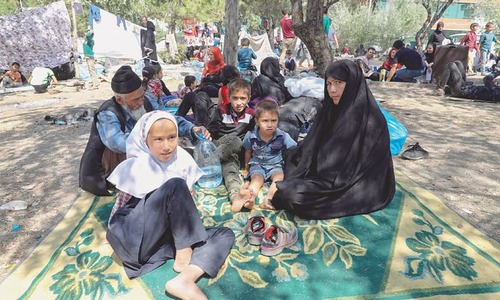
KABUL: Afghanistan’s neighbours, caught off-guard by reports of US plans to withdraw thousands of troops, have begun preparing for the risk that a pullout could send hundreds of thousands of refugees fleeing across their borders, diplomats say.
Alarmed by the possibility of a chaotic withdrawal, diplomats from neighbouring countries who have been in talks with US officials in Kabul said they were reassessing policies and would ramp up border preparations.
“At this point there is no clarity about the withdrawal, but we have to keep a clear action plan ready,” said a senior Asian diplomat based in Kabul. “The situation can turn from bad to worse very quickly.”
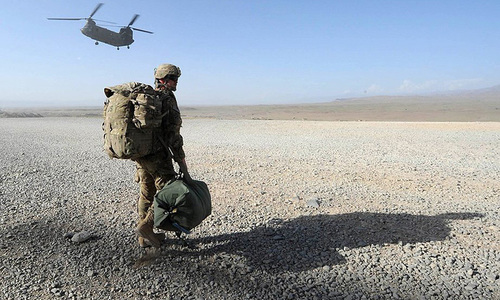
A White House spokesman last week said US President Donald Trump had not issued orders to the Pentagon to withdraw troops from Afghanistan. But the administration has not denied reports that the United States plans to pull out almost half of the 14,000-strong force currently deployed.
The reports come amid an intensification of moves towards peace negotiations in Afghanistan. US special envoy Zalmay Khalilzad met Taliban representatives last month and discussed issues around a future troop withdrawal as well as proposals for a ceasefire.
But even among regional powers such as Iran, Pakistan or Russia that have long been suspicious that the United States wants permanent military bases in South Asia, there is no appetite for a sudden US withdrawal, say analysts.
“While the news of a potential US drawdown may be a reason for cautious optimism in the region, they don’t want an abrupt withdrawal,” said Graeme Smith, a consultant for the International Crisis Group.
“All sides recognise that a precipitous pullout could spark a new civil war that destabilises the region. The neighbours do not enjoy surprises, and the uncertain signals from Washington are causing anxiety.”
The United States, which sent troops to Afghanistan in the wake of the Sept 11, 2001 attacks on New York and Washington and at the peak of the deployment had more than 100,000 troops in the country, withdrew most of its forces in 2014, but still keeps around 14,000 troops there as part of a Nato-led mission aiding the Afghan security forces and hunting militants.
The top US general in Afghanistan said 2019 was going to be an interesting year. “The policy review is going on in multiple capitals, peace talks out there, regional players pressing for peace, the Taliban talking about peace, the Afghan government talking about peace,” said General Scott Miller, the US commander of Afghanistan’s Nato-led force, at the Resolute Support mission headquarters in Kabul.
Border security
Pakistan, which is already working to fence its 1,400km frontier with Afghanistan and deploy a 50,000-strong paramilitary force along the border, is preparing for a fresh influx of refugees in the event of disorder.
“Camps will be set up near the border to manage a fresh wave of Afghan refugees and illegal migrants and Afghans will not be allowed to set up illegal homes in Pakistan,” said an official, speaking on condition of anonymity.
Afghanistan, which shares borders with Pakistan, Iran, Turkmenistan, Uzbekistan, Tajikistan and China, is already the world’s second biggest source of refugees, according to the United Nations High Commissioner for Refugees.
The International Organisation for Migration (IOM) estimates that approximately 1.4 million undocumented Afghans live in Pakistan and possibly 1.2 million in Iran.
Published in Dawn, January 2nd, 2019