PM’s aide says free trade accords with China to be revised



ISLAMABAD: The Pakistan Tehreek-i-Insaf government on Wednesday reiterated its plan to revise the existing free trade agreements (FTAs) with China, on the plea that these had proved counterproductive for the country’s industrial sector.
Also read: Why we don’t need an FTA with China
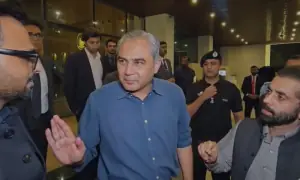
Adviser to the Prime Minister on Commerce Abdul Razak Dawood announced this while speaking to the business community at the Islamabad Chamber of Commerce and Industries (ICCI). He was seeking feedback from the business community of the federal capital for his forthcoming policies on industrial and trade.
As part of revising the existing FTAs, Mr Dawood said the PTI government would sign the revised free trade agreement with China by June 2019. Both countries have already held more than 10 rounds of talks, but Beijing is not willing to extend concessions to Pakistan which it provides to other partner countries.
In the first weeks of November this year, Prime Minister Imran Khan visited China. Soon after the visit, the adviser on commerce announced that Pakistan would get market access worth $1 billion in exports to China during the current fiscal year.
Insists FTAs with many countries prove counterproductive for Pakistan’s industrial sector
But this claim now seems to have hit an impasse as the adviser said that an official delegation would soon leave for China to negotiate the market access proposal with the Chinese commerce ministry officials. The proposed visit of Pakistani officials shows that any package from Beijing will be a part of the second phase of the China-Pakistan FTA.
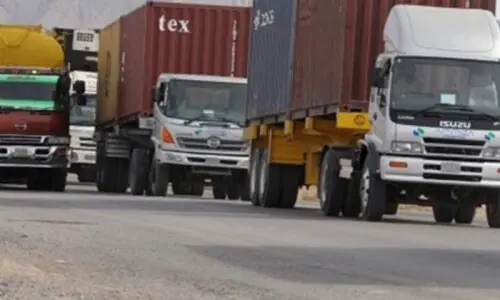
The volume of trade between the two countries has seen a significant jump during the last decade. The bilateral trade, which was $4bn in 2006-7, reached an all-time high of $17.4bn last year. The increase in trade came following the China-Pakistan FTA signed on Nov 24, 2006 and implemented from July 1, 2007.
Talking to reporters after the meeting with ICCI officials, Mr Dawood said Pakistan was the net losers of these FTAs, especially with Indonesia, Malaysia and China, adding that the ill-advised free trade agreements led to closure of industrial units in the country. As a result, he said, the overall export proceeds from the country also fell to $20bn from $25bn in the last five years.
After China, the adviser said, Pakistan would also renegotiate the FTA with Malaysia to reduce trade deficit between the two countries.
Imports from Malaysia are more than $1bn while exports stand at $150m.
Mr Dawood also announced that the PTI government would not negotiate any new free trade agreement with any other country. He said the government would soon announce broad contour of the proposed industrial policy, adding that he would brief the prime minister on the policy in the first week of January.
The focus of the policy will be on promoting investment in the export sectors. The adviser said that new sectors like engineering, chemicals, information technology and agriculture would be encouraged through incentives to enhance the country’s export proceeds.
Under the proposed tariff policy, he said, duty on raw materials would be reduced. The policy would be finalised by the next budget, he said, adding that duty structure would be rationalised on several products in the budget.
Mr Dawood said the proposed policies would encourage industrialisation in the country.
Published in Dawn, December 27th, 2018