Exploit Basmati rice export potential: ADB study


 0
0


ISLAMABAD: The celebrated export of Pakistan’s basmati rice as well as its production has slipped, according to a study of Asian Development Bank (ADB).
The study, ‘Investment in Research and Development for Basmati Rice in Pakistan’ points out that the contribution of basmati rice as a major export commodity is below its potential.
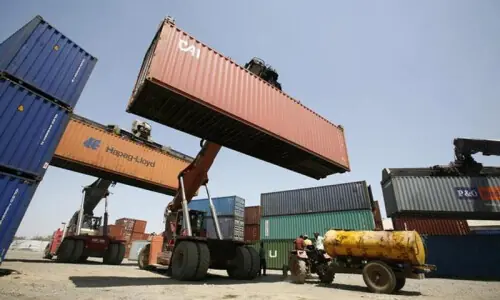
Pakistan is fourth largest rice exporter in terms of quantity, and rice is the country’s second largest export earner, after cotton.
In the last decade, Pakistan’s overall rice export growth has remained unchanged and, in the case of basmati, has dropped significantly.
Newer long grain, non-aromatic varieties have been cutting into basmati’s share of the premium rice market. Low value, non-basmati varieties can still thrive by catering to low-priced, lower-quality markets but premium varieties require greater research and development investment to maintain their edge.
The study notes that being a niche variety with a relatively small gene pool, basmati requires more research than other varieties in order to increase its yields, protect it from disease, enhance its ability to compete with other varieties, and increase its resilience to climate and other environmental changes.
Under-investment in basmati research and development (R&D) has led to underperformance of the subsector.
Merely increasing budgetary allocations of public sector R&D will not achieve the intended purpose.
A wholesale reform of the R&D institutional structure is almost impossible given incumbent interests and the absence of political motivation.
While investment in basmati R&D requires attention to the entire value-chain, the single most important aspect is to develop seed varieties that can thrive in changing ecological and marketing environments.
The study says that the cess collected from rice exporters in the last two decades has not been chanelled as the Export Development Fund Act stipulates. The Act specifies that the cess funds can be used for R&D, technical institutes, market and product development, and other areas related to export enhancement.
Rice exporters pay a surcharge of 0.25 per cent, which is deducted by the bank from foreign receipts and submitted to the State Bank of Pakistan.
Published in Dawn, December 15th, 2018