Steel bar sales slump


 0
0
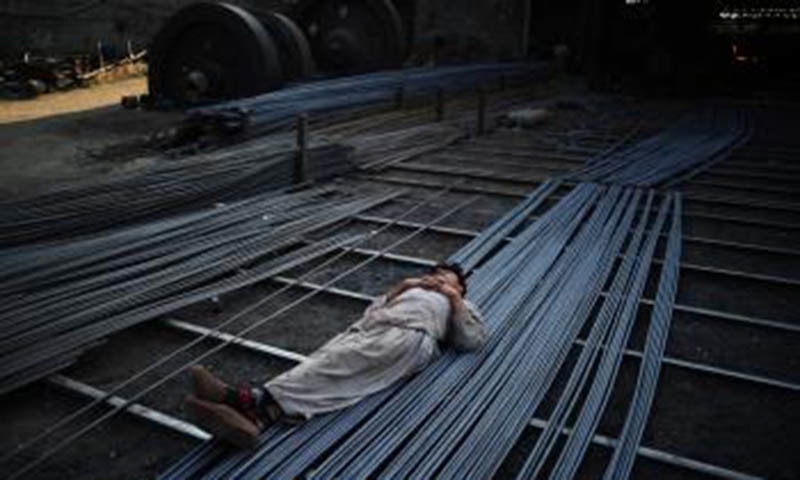

KARACHI: Steel bar sales have slumped in the last three months amid slow demand due to suspension of mega projects by the government and private sector developers.
The government has slashed development budgets and is reevaluating mega projects in the country in order to rein in the widening fiscal deficit leading to a significant fall in demand for steel bars. Demand from private sector developers has also declined after the Supreme Court banned construction of high-rise buildings in the urban centres citing water shortage.
The situation is further aggravated by bars smuggled from the Iranian border which are being sold at cheaper rates after the US-led sanctions on Tehran.
An analyst at Top Line Securities said that the Iranian steel in local market is putting pressure on local rebar prices as Iranian product sells at Rs 98,000 per tonne as against locally produced Rs 104,000-105,000 per tonne.
Besides, local players have reduced their prices to Rs 105,000 from Rs 110,000 per tonne to stay competitive in the market.
Irshad Mowjee of Razzak Steel said that besides the ban of high-rise buildings steel bars pouring in from the Western border have depressed the markets further. He asked the government to intervene and address the situation.
“The industry was anticipating a sale of around 6 million tonnes of long bars but due to the declining demand in the last two to three months, sales forecasts have been revised downwards to around 5m tonnes for the next 12 months,” he said.
Moreover, construction work on China-Pakistan Economic Corridor (CPEC) related projects have also cooled down resulting in thin demand of steel bars, he claimed.
On the other hand, frequent devaluation of the rupee is also causing uncertainty thus increasing the cost of imported raw materials, he added. Subsequently, the rates of good quality steel bars, which usually rise after currency depreciation, have fallen to around Rs100,000 per tonne from Rs103,000-104,000.
Mowjee, however, brushed away fears of a long-term slump in demand saying that this is a temporary phenomenon. He claims that the projects, which are currently being reviewed, are likely to start within a few months.
Acting Chairman Karachi Iron and Steel Merchants Association Shamoon Bakar Ali said that the steel market has seen a 25-30pc decline in steel bar sales in the last three months mainly due to unsatisfactory demand, dearth of new big projects from both public and private sector.
He added that the sales forecast for Punjab are also bleak where no new projects are coming up.
Chairman Pakistan Steel Re-Rolling Mills Association Kashif Ayub claimed that more than 300 mills in Sindh, Balochistan and Punjab have resumed production after suspending their operations last month. They are, however, running at 20-25pc production capacity owing to sharp fall in orders.
“Our 70-80pc labor has become jobless as running industries at 25pc cannot be termed as satisfactory production,” he said.
Chairman Association of Builders and Developers (ABAD) Muhammad Hassan Bakshi said that the construction industry is passing through a critical period due to the existing ban on construction of high-rise buildings in Karachi.
He said that ban on high-rise have hurt the construction industry as around 600 projects are currently awaiting approval, investments in the sector have stopped and more than 500,000 people are rendered jobless.
Government projects account for nearly 50pc of the total steel bar sales, 35pc come from private high-rise and housing projects and remaining from the individual construction by consumers.
Published in Dawn, December 9th, 2018