Fin whale, mountain gorilla populations rise amid conservation action


THE fin whale and mountain gorilla populations grew significantly due to efforts by conservationists to halt their descent towards extinction, the International Union for Conservation of Nature (IUCN) said on Wednesday. In an update of its “Red List” of threatened species, the IUCN said that a broad whaling ban had allowed the fin whale’s global population to roughly double since the 1970s to around 100,000 mature individuals, pushing it off the “endangered” list to the “vulnerable” category. International bans on commercial whaling have been in place since 1976 in the North Pacific and in the southern hemisphere. There have been significant reductions in catches in the North Atlantic since 1990.
Another whale species that had been overexploited for its blubber, oil and meat — the western gray whale — has also benefitted and moved from the “critically endangered” to the “endangered” category. “It is a relief to finally see their populations on the rise,” Randall Reeves, head of IUCN’s cetacean specialist group, said in the statement.
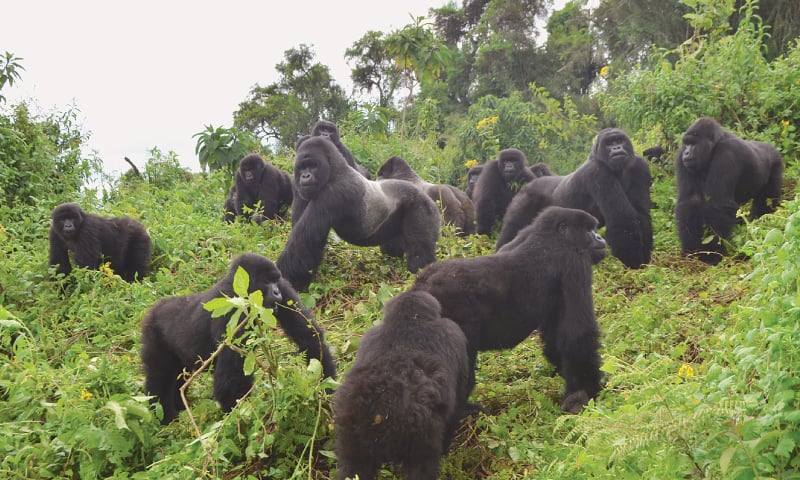
The mountain gorilla meanwhile has been moved from the “critically endangered” category to “endangered” thanks to collaborative conservation efforts across several countries, including anti-poaching patrols, IUCN said.
In the last Red List assessment of the mountain gorilla in 2008, its population was estimated at around 680 individuals. Ten years later, its population is estimated to have grown to over 1,000 individuals — the highest figure ever recorded for the subspecies of the Eastern Gorilla, IUCN said. It still faces significant threats, including poaching, recurring civil unrest and diseases.
“Today’s update to the IUCN Red List illustrates the power of conservation action,” Inger Andersen, IUCN Director General, said in a statement. “These conservation successes are proof that the ambitious, collaborative efforts of governments, business and civil society could turn back the tide of species loss,” she said.
Published in Dawn, November 15th, 2018