Prices of petroleum products may increase by up to Rs13



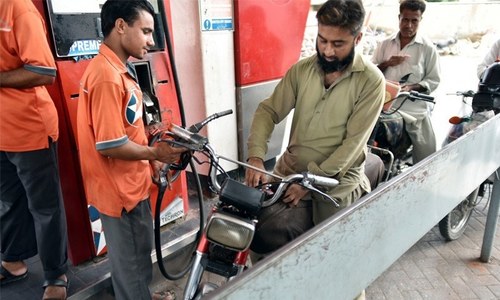
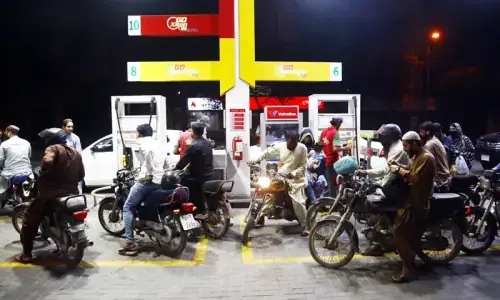
ISLAMABAD: Prices of all petroleum products are expected to increase by up to Rs13 per litre because of steep currency depreciation and higher international oil prices.
A senior petroleum division official said a summary from the Oil and Gas Regulatory Authority (Ogra) for an increase in oil prices for the month of November had reached the finance ministry. Ogra’s working paper for the price increase is based on the existing tax rates and average import costs paid by the Pakistan State Oil (PSO) in October.
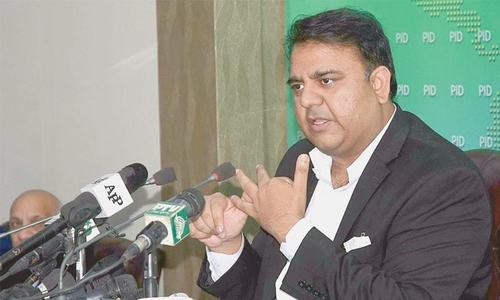
The finance ministry will announce the revised rates of petroleum products with the approval of the prime minister on Wednesday. Finance Minister Asad Umar has already hinted at increasing oil prices, saying the government has minimised taxes on petroleum products to protect the common man, but the prices are still going up and need to be looked into.
Based on the existing rate of general sales tax and petroleum levy, Ogra has worked out about Rs13.10 per litre increase in ex-depot price of high speed diesel (HSD) to Rs119.67 from Rs106.57, up by 12.3pc. The price of petrol has been proposed to go up by Rs9 to Rs101.83 per litre from Rs92.83, up by about 9.7pc.
The price of kerosene been worked out to go up by Rs6.47 to Rs90 per litre from Rs83.50 and that of light diesel oil (LDO) by Rs6.48 to Rs82.44 per litre from Rs75.96.
The government had last month kept the prices of all petroleum products unchanged despite an average increase of Rs4 per litre proposed by Ogra. The government had slightly reduced tax rates on the products with the expectation that oil prices in the international market might come down which did not materialise. Also, the first week of October saw a steep devaluation of local currency, which will now be a major factor for price increase.
The official said the government still had the cushion to maintain diesel price which had an inflationary impact across the economy. This is important given the recent increase in electricity and gas prices with inflationary contribution. On the other hand, the government could shift the burden to petrol prices to make up for the revenue loss. This, he said, could be easily done by rationalising general sales tax on both products.
The prices of petroleum products have generally been on the rise since early 2017, except a couple of reductions.
Published in Dawn, October 31st, 2018