
Lovers of cricket in Pakistan are familiar with the rich cricketing legacy of Hyderabad’s Niaz Stadium. They still have fond memories of the packed-to-capacity ground that wholeheartedly supported all-rounder Imran Khan (now prime minister of the country) and the two Ws (Wasim Akram and Waqar Younis) as they took many wickets of international batsmen from the New Pavilion and Eidgah ends.
From the historic unbeaten 280-run knock by Javed Miandad against India to skipper Imran Khan’s 6/35 in the same Test match, and from the first hat-trick in ODI cricket by Jalaluddin to Pakistan beating Sri Lanka in the inaugural match of the 1987 World Cup, the stadium has seen it all.
The decade of the 1980s is considered this stadium’s golden period when most matches against the world’s top teams were played on this ground and thousands thronged the venue to watch them.
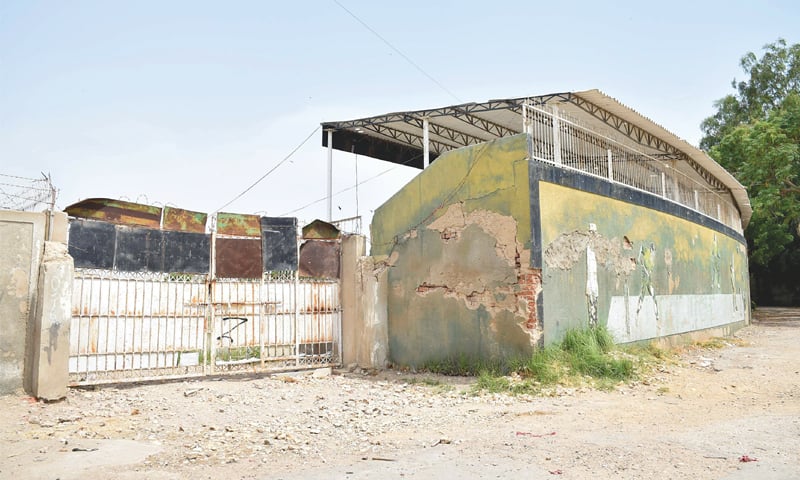
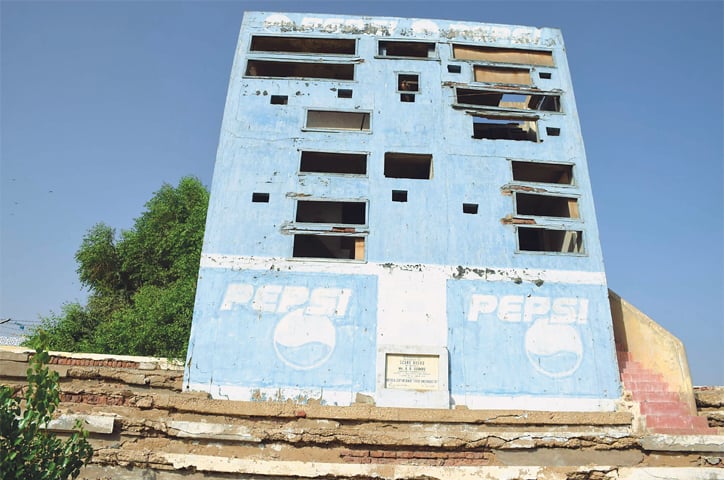
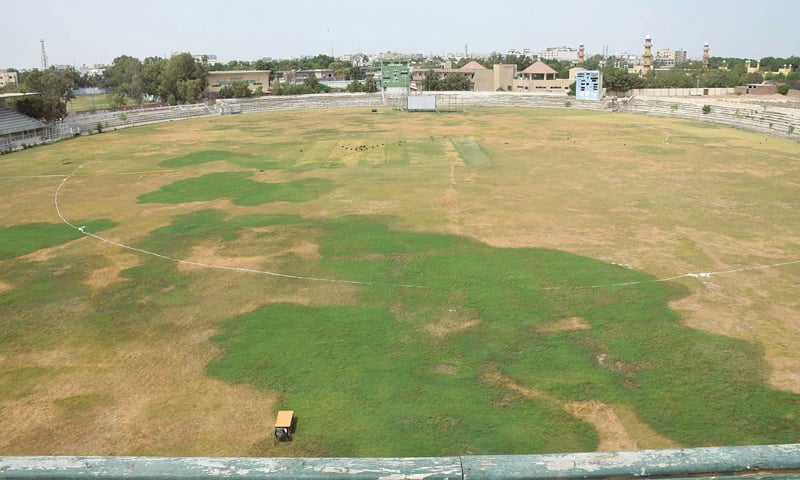
Hyderabad’s Niaz Stadium has hosted many a glorious cricket match. Sadly, neglect on multiple levels has caused this venue to cut a sorry picture
“I remember the spat between Viv Richards and umpire Shakeel Khan after the former was adjudged LBW off Abdul Qadir for a duck in an ODI match in 1986,” recalls cricket writer Afia Salam. “The invitation passes given to me soon after getting married were like a wedding gift. We were also invited for breakfast by the local organisers at a local hotel across the stadium but we declined as after getting the passes we straightaway headed to the stands,” she says. The match Salam refers to was won by Pakistan by 11 runs on Nov 18, 1986. The following year Pakistan staged the inaugural match of the 1987 Reliance World Cup at the same venue.
The world’s 1,000th Test match was played between Pakistan and New Zealand here (with Javed Miandad scoring 100 in each innings). It would be interesting to note that at Niaz Stadium, Pakistan has remained undefeated both in Tests and One-Day Internationals (ODIs).
It is also the ground where Imran Khan played his career’s last cricket match in Pakistan against Sri Lanka on January 15, 1992. Before that he attended a star-studded fund-raiser for his cancer hospital at the local circuit house, which was organised by the Hyderabad-based Pakistan Sports Welfare Association (PSWA) representatives Abdul Rehman Rajput, Ghulam Mohammad, Rahat Ali and Shakeel Qureshi. “We collected Rs8.2m,” Rajput says.
Even after entering politics, the former captain has raised his voice for the stadium’s upkeep. He had once openly expressed his dissatisfaction after finding out that a wedding had been organised inside the ground.
After the September 28, 1997 Pakistan-versus-India ODI, however, there was a long drought of matches. Then in January 2008, the ground hosted another ODI match between Pakistan and Zimbabwe. By that time the Pakistan Cricket Board (PCB) had got administrative control of it under an accord. However, in 2009 came the attack on the visiting Sri Lankan team in Lahore. It was a tragedy that proved disastrous for cricket in Pakistan as it closed the doors to international cricket in the country. Almost 10 years down the road, the Pakistan Super League (PSL) matches have apparently rekindled hopes among cricket lovers that the ground may be selected for hosting a cricket event. Apparently, these hopes have proved to be short-lived, as this year the agreement with the PCB regarding this ground was revoked by the local municipal committee.
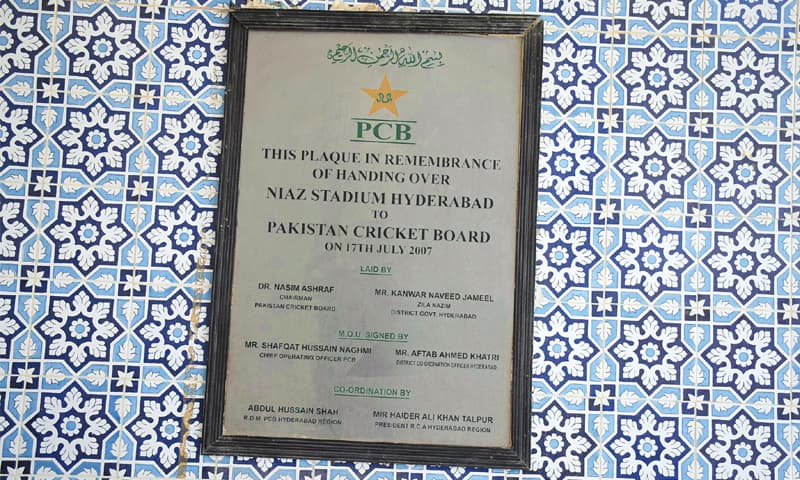
Until April 2018 the stadium administratively remained with the PCB under a memorandum of understanding (MoU) signed between the PCB and the then district government of Hyderabad in July 2007. Now the local municipal committee Qasimabad is its custodian. The committee, while cancelling the MoU, blamed the PCB for not honouring commitments made in the MoU — perhaps rightly so. While investing in other cricket projects in the rest of the country, the PCB failed to honour its commitments envisaged in the MoU.
Historically, the ground was the property of the Hyderabad Municipal Corporation (HMC) until it was handed over to the PCB in July 2007 by the district government formed under the newly introduced local government system. When the old local government system was revived in the province by the PPP, the HMC got its control again. But the HMC, subsequently, was bifurcated for political reasons and the ground had to be transferred to the Qasimabad committee since it is located in that municipal area.
But the ground was already decaying because of constant neglect as the HMC’s elected/unelected managements, over the years, remained barely concerned about its maintenance. The stadium became a venue for hosting events other than cricket — holding of the Sindh Games’ different ceremonies, wedding events — and was also used as a preparation of helipad for VIPs, etc.
All this has been highlighted by journalists on various occasions.
When under the HMC, the stadium was managed by an official who happens to be in the saddle once again. He misused his position and the stadium. He allowed players only from his own club to use it for net practice sessions. As far as its upgradation was concerned, the then district nazim, Kanwar Naveed Jamil, realised that the district government could not manage it properly. Things looked up a bit when Jamil decided to hand it over to the PCB under the MoU. The then powerful PCB chairman Dr Nasim Ashraf, a close friend of former president Gen Pervez Musharraf, was also passionate about its improvement. The uplift plan included seating capacity enhancement, installation of a digital scoreboard and floodlights along with other modern facilities necessary for cricket. The PCB was also under obligation to pay an annual fee of Rs50,000 to the district government.
After the PCB staff restored its outfield, the ground hosted several domestic-level cricket matches annually that provided an opportunity for the locals to see cricketers of the calibre of Mohammad Hafeez, Kamran Akmal, Fawad Alam, Nasir Jamshed, Mohammad Irfan, Younis Khan, Mohammad Asif, Salman Butt, Umer Akmal and others playing here. Mohammad Asif, Salman Butt and Kamran Akmal were all praise for the ground’s outfield. “We have played high-scoring matches here as the playing conditions are quite conducive. But the ground, indeed, requires an uplift,” Butt had said while playing for Wapda.
But after the revolation of the agreement, one fears whether the PCB would still be allotting domestic matches to this venue. Successive PCB bosses certainly didn’t take up any upgradation work as promised. For instance, the former PCB chairman Zaka Ashraf had, on the eve of the golden jubilee celebrations of the stadium, announced to install floodlights, but it did not happen. He did build a stadium in Garrhi Khuda Bux primarily to make his political leadership happy, without investing a single penny in Niaz Stadium. This instilled despondency in members of the municipal committee. Eventually, the committee decided to revoke the MoU.
“They had even approved funds of Rs170m for floodlights installation at the stadium during the PCB’s governing body meeting but they [funds] were not released by the board,” says former Regional Cricket Association (RCA) president Mir Haider Talpur. The PCB did develop grounds in various districts of Sindh, though, which was not done previously.
“Nasim Ashraf’s plan was to rebuild Niaz Stadium and establish a national-level cricket academy here. But nothing is going to happen now after the MoU being cancelled,” Talpur says. He is skeptical about the local committee’s decision to cancel the agreement and says, “The local committee’s leaders might be eyeing this huge property and bring in some builder to launch a commercial project here.”
The local committee rightly blames the PCB for doing nothing to upgrade the stadium except for maintaining its outfield in the last 11 years. Its decision, however, is surprising and open to scrutiny as well. It has come at a time when the PCB has started holding PSL matches in Pakistan. Karachi hosted the third edition’s final in March this year. Basking in the glory of the success of PSL’s third edition’s final, the outgoing PCB chief Najam Sethi had hinted that Sindh’s second largest city, Hyderabad, too might host a PSL match in the fourth season. Sindh’s chief minister Syed Murad Ali Shah has also expressed similar optimism. But there are genuine fears that the stadium might face further decay.
The municipal committee, according to its chairman Kashif Shoro, would be approaching the CM for the release of several million rupees to ensure renovation work of urgent nature and include development work in the annual development plan (ADP) of the Sindh government. “We plan to hire a consulting firm to propose what kind of work is needed in the stadium,” Shoro says but without elaborating when the consultants are going to be hired to come up with a feasibility report.
A cricketer who wishes to remain anonymous says, “The local municipal committee, which is even unable to manage its zoo and Rani Bagh on its own, is now interestingly poised to manage a project such as the Niaz Stadium.” He is not wrong. Rani Bagh, which was renovated by the district government at a cost of Rs150m before being given to the then taluka municipal administration Qasimabad, could not be maintained. Today, it stands as a monument to official neglect. With such a track record, how can the local committee aim to run a stadium?
Even the Sindh government is unlikely to go for rebuilding the stadium on its own when it has burdened itself with serious work in the social sector amidst limited funds transfers from the federal government’s divisible pool.
All provincial governments have to work in tandem with the PCB for holding of matches as it is the cricket board that regulates national and international level cricket. The provincial government lacks the expertise, manpower and experience to manage a stadium. The local committee, on its part, may look for some commercially-driven ventures or interests.
“When the PCB was in the mood to do something for the ground, the MoU was revoked,” says Talpur. “We only had one centre in Sindh after Karachi where a high-level cricket game could be organised and now we have lost this opportunity, too. We don’t know whether the PCB will allocate national-level tournament’s matches here now. These days, we are not even allowed inside the stadium where our office is located. It is interesting to see that the local committee, which is planning to run Rani Bagh through a public-private partnership still wants to run Niaz Stadium. I am wondering if it can really happen,” he says. He proposes that the PCB re-negotiate its agreement with the local committee.
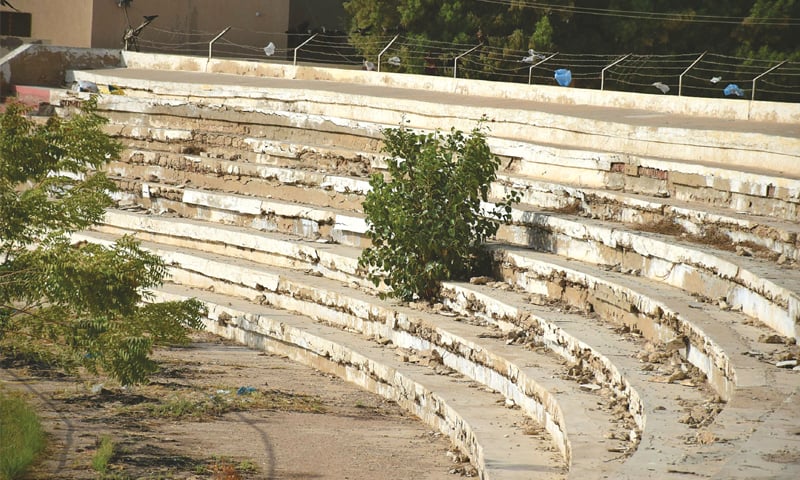
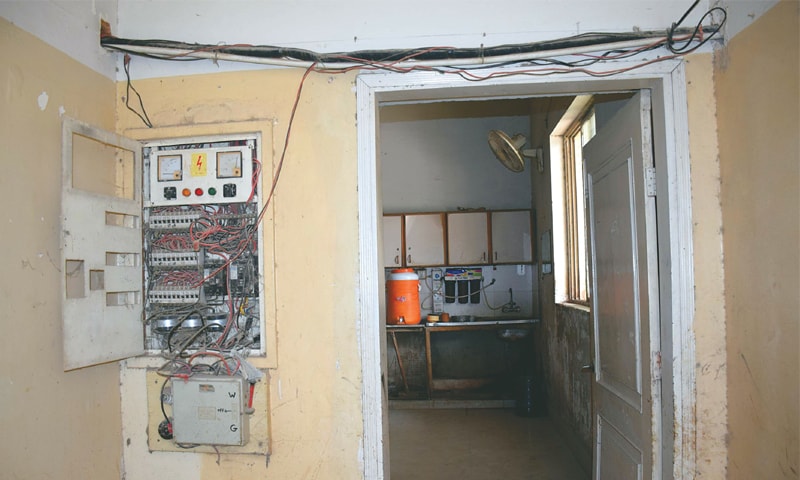
For cricket-lovers the conditions at the stadium are painful. Those with any emotional attachment to cricket and the stadium — established by the then Hyderabad division commissioner Niaz Ahmed in October 1959 — can hardly reconcile with the present state of the stadium. There are large patches of burnt grass in the outfield, termites have eaten the cupboards in the players’ rooms, and the stairs in general enclosures are fast crumbling because of the water seepage issue. The entire stadium needs a massive.
The writer is a member of staff
Published in Dawn, EOS, October 28th, 2018
Download the new Dawn mobile app here: