Rohingya genocide still taking place in Myanmar: UN investigator


Genocide is still taking place against Rohingya Muslims remaining in Myanmar and the government is increasingly demonstrating it has no interest in establishing a fully functioning democracy, UN investigators said on Wednesday.
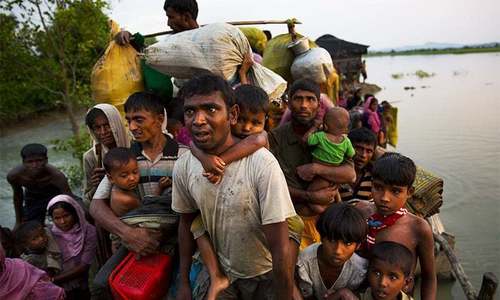
Marzuki Darusman, chair of the UN fact-finding mission on Myanmar, said thousands of Rohingya are still fleeing to Bangladesh, and the estimated 250,000 to 400,000 who have remained following last year's brutal military campaign in the Buddhist-majority country “continue to suffer the most severe” restrictions and repression.
“It is an ongoing genocide that is taking place at the moment,” he told a news conference on Wednesday.
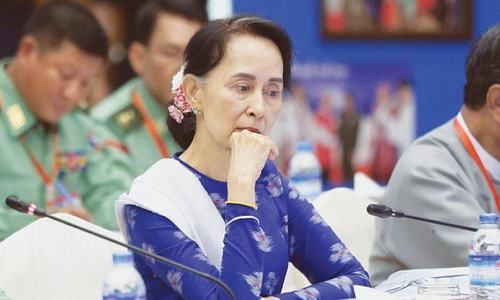
Yanghee Lee, the UN special investigator on human rights in Myanmar, said she and many others in the international community hoped the situation under Aung San Suu Kyi “would be vastly different from the past but it is really not that much different from the past.”
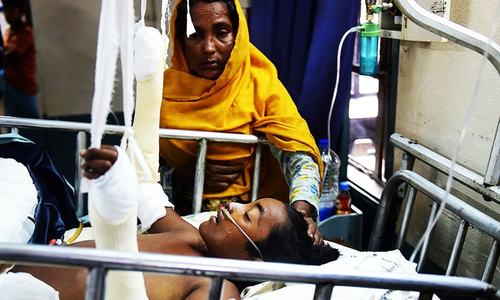
She added later that she thinks Suu Kyi, the Nobel Peace Prize laureate and former political prisoner who now leads Myanmar's civilian government, “is in total denial” about accusations that the military in Buddhist-majority Myanmar raped, murdered and tortured Rohingya and burned their villages, sending about 700,000 fleeing to Bangladesh since August last year.
“The government is increasingly demonstrating that it has no interest and capacity in establishing a fully functioning democracy where all its people equally enjoy all their rights and freedoms,” Lee said. “It is not upholding justice and rule of law” which Suu Kyi “repeatedly says is the standard to which all in Myanmar are held.”
If this were the case, she said, fair laws would be applied impartially to all people, impunity would not rein, “and the law would not be wielded as a weapon of oppression.” Suu Kyi's government has rejected independent international investigations into the alleged abuses and has commissioned its own probe.
The government has also rejected the report by the mission led by Darusman which said some top military leaders should be prosecuted for war crimes, crimes against humanity and genocide against the Rohingya during the crackdown.
“The Myanmar government's hardened positions are by far the greatest obstacle,” Darusman told reporters. “Its continued denials, its attempts to shield itself under the cover of national sovereignty and its dismissal of 444 pages of details about the facts and circumstances of recent human rights violations that point to the most serious crimes under international law” strengthens the need for international action because “accountability cannot be expected from the national processes,” he said.
Marzuki was scheduled to brief the UN Security Council Wednesday, a meeting which six of the council's 15 members objected to, including China, which is Myanmar's neighbor and ally, Russia, Bolivia, Equatorial Guinea, Ethiopia and Kazakhstan.
Marzuki said he will urge the council to take action to hold those responsible for atrocities against the Rohingya accountable, either by referring Myanmar to the International Criminal Court or setting up an international tribunal. But any action appears highly unlikely because of almost certain opposition from China, a veto-wielding council member.
As for the Rohingya refugees returning to Myanmar, Lee said, “there's been a lot of progress in terms of economic development and infrastructure, but in the area of 'democratic space' and people's right to claim back their land ... there is no progress.” “The repatriation is not possible now,” she stressed.
“I will not encourage any repatriation. Conducive conditions mean they should not go back to the existing laws, policies and practices ... the oppressive laws, the discrimination. The minimum they need is freedom of movement, access to basic health services.” “Right now, it's like an apartheid situation where Rohingyas still living in Myanmar ... have no freedom of movement,” Lee said.
“The camps, the shelters, the model villages that are being built, it's more of a cementing of total segregation or separation from the Rakhine ethnic community.”