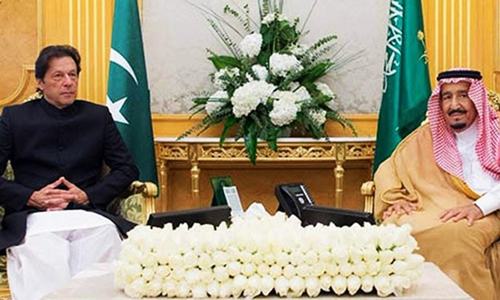
Saudi team arrives in Pakistan, may sign four MoUs


ISLAMABAD: Pakistan and Saudi Arabia are expected to sign four memoranda of understanding (MoUs) for oil and mineral sector investment and trade cooperation that would ultimately extend the Chinese Belt and Road Initiative (BRI) from Gwadar to Africa through Oman and Riyadh.
The MoUs are planned to be signed on the conclusion of a four-day visit of Saudi delegation that arrived here on Sunday, sources said. The move will enable Islamabad to secure supply of petroleum products and crude oil on deferred payments and Riyadh will be looking into setting up of an oil refinery at Gwadar, invest in a copper and gold project in Balochistan’s Reko Diq and LNG-based power projects in Punjab.
Led by the Minister for Energy, Industry and Mineral Resources, the visiting delegation would also have members from the Saudi national oil firm, Aramco, the sources said. Besides authorities of various ministries, state-run Pakistan State Oil (PSO) would be the only Pakistani firm to be part of a direct dialogue, the sources added.
Islamabad to get oil supply on deferred payments and Riyadh may set up an oil refinery, invest in mineral and energy projects
They said Riyadh had been looking for diversifying its trade routes, including for oil supplies because of its tension with Qatar and Iran.
It is considering two options — about 40km bridge or tunnel — to link Gwadar with Muscat and Oman at the mouth of Strait of Hormuz on one side and connect its industrial city of Jazan with Eritrea’s Massawa region through a 440km tunnel across the Red Sea. The land route between Muscat and Jazan port is around 2200km.
The sources said the meetings would be held on Monday between the officials of Saudi and Pakistani companies under the aegis of the ministries of energy & mineral resources and industries & production for a 110,000 barrel per day (BPD) refinery at Gwadar and investment in copper mines of Reko Diq and phosphate supply.
The sources said the two sides would also discuss the supply of refined products and crude oil imports on deferred payments followed by another session for proposed privatisation of two LNG-based power plants set up by federal funding in Punjab the same day (Monday).
They said the teams would then travel to Gwadar port and Reko Diq on Tuesday for field visits. The two sides would hold final discussions on Wednesday on proposed MoUs on the Gwadar refinery, Reko Diq, two power plants and oil supplies — both refined and crude.
The sources said Pakistan had requested Saudi Arabia for a long-term arrangement for oil supplies on delayed payments – one of the most crucial avenues for balance of payments support.
Pakistan is importing about 110,000 barrels per day (BPD) crude oil from Saudi Arabia, out of its total import of about 350,000 BPD.
Riyadh provided deferred payment facility for oil supplies initially for two years soon after Pakistan went nuclear in 1998 and then kept extending the facility for another three years.
The Gwadar refinery proposed to be set up by Saudi Arabia could be used for supply of refined products to Pakistani market or for export.
All the projects would take time to materialise, said a finance ministry official but hinted that investments flowing into Pakistan could support declining foreign exchange reserves.
The discussions are taking place at a time when a staff mission of the IMF is simultaneously holding Article IV consultations with the authorities that could become the basis for a future IMF programme if the government agreed. The support from Saudi Arabia would be one of the key factors to determine if Pakistan should go for the IMF programme.
Pakistan’s oil import bill amounted to $14.5 billion during the financial year ending on June 30, 2018, and could go up to $18bn this year with higher prices and increased consumption.
Published in Dawn, October 1st, 2018