7
7

OVER the past seven decades, the hallowed halls of the UN have witnessed some fiery, marathon speeches by world leaders that have become classics in diplomatic lore.
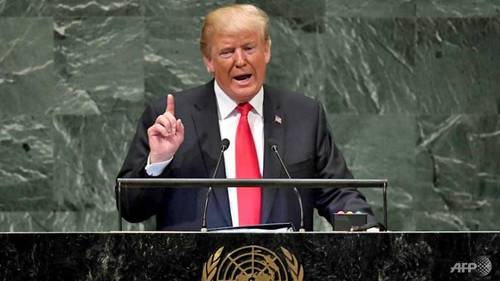
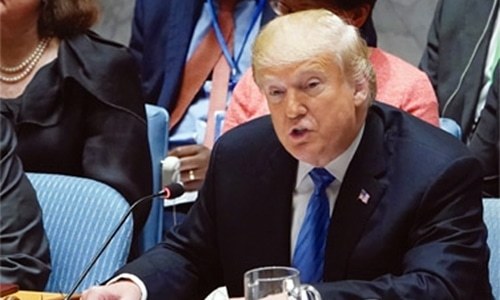
The oratory of Soviet leader Nikita Khrushchev, Cuban revolutionary leader Fidel Castro and Palestinian icon Yasser Arafat springs to mind. Zulfikar Ali Bhutto’s speech at the Security Council in 1971 also merits mention. However, Donald Trump’s second speech as US president at the UN General Assembly on Tuesday will also be remembered — for all the wrong reasons.
In effect, the US president attacked the concept of multilateral diplomacy in the very institution that has championed it since the Second World War, striking a confrontational, populist tone.
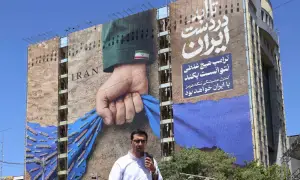
“We reject the ideology of globalism and we embrace the doctrine of patriotism,” he observed. He urged all “responsible nations” to defend their sovereignty from “global governance”. Mr Trump’s speech also contained plenty of invective against Iran, signalling that a thaw in relations between Washington and Tehran is highly unlikely.
Read: Laughter at Trump among a long line of shocking UN moments
Presently, in many parts of the world, the dangers of populism and hyper-patriotism are apparent.
In Europe, many far-right groups have entered parliaments across the continent. The subcontinent is also not immune to the rise in right-wing zealotry; we in Pakistan have seen fanatics being mainstreamed while in India, the ruling BJP is increasingly showing its ‘true’ saffron colours and commitment to Hindutva, challenging the concept of secular democracy. And in the US itself, Mr Trump’s very rise has challenged the system, as the American far right has been emboldened by the US president’s capture of power.
If anything, the world currently needs more globalism and cooperation, not less.
Not too long ago, we witnessed the horrors of extreme populism as the far right in Europe unleashed a reign of terror during the Second World War. Worryingly, much of the language and symbolism being used by some leaders, including Mr Trump, can be interpreted as condoning extreme rightist tendencies.
If diplomacy, multilateralism and dialogue are abandoned, what are the alternatives? Instead of rejecting globalism, it is isolationism and confrontation that should be shunned, and all states must work towards rebuilding an admittedly broken global system.
Instead of more wars, more weapons and more deaths that will undoubtedly result if the path of confrontation is pursued by states, efforts must be made to create a more just global order governed by human rights and international law, where states’ sovereignty is respected and poverty, hunger and disease are addressed collectively.
Published in Dawn, September 27th, 2018