0
0

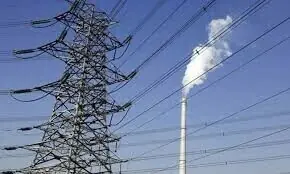
LAHORE, June 13: The Lahore High Court has held that industries are obliged to pay electricity duty to the provincial government even if they are generating power for their own consumption. Dismissing 47 writ petitions moved by a number of sugar, fertilizers and textile mills and power companies, the court observed that the provincial government’s notification issued on Aug 25, 2001, to levy the duty was valid and enjoyed the backing of the Punjab Finance Ordinance of 2001 through which a duty on electric power produced with the generator having a capacity of more than 500KW was enforced.
The court, however, restrained the Punjab government from receiving the duty from July 1, 2001, observing that the notification was promulgated on Aug 25 and the levy of duty from July 1 was unlawful as such collections could not take effect retrospectively. The court directed the government to collect the duty from the day the notification was issued.
The mills had challenged the electricity duty on the plea that they were not generating power for commercial purposes. The mills also contended that neither were they holding licence as producers of power for sale nor enforcing any power tariff which alone was the basis to determine duty.
Additional Advocate-General Aamer Rehman and Wapda’s counsel Abdur Rehman Madni opposed the petitions on the grounds that Article 157 of the Constitution empowered the provincial governments to enforce electricity duty.
The court cited the 1997 SCMR 641 which interpreted Article 157 of the Constitution in a way as to hold that the levy of an electricity duty was within the competence of a province.
SC notice: A division bench of the Supreme Court on Monday issued notices to the deputy attorney-general and the Punjab advocate-general in a leave to appeal which challenged the increase in court fee.
Advocate A.K. Dogar argued that increase in the court fee was tantamount to depriving the litigant public of their right to seek justice at a little expense.
The appeal, moved by advocate M.D. Tahir, submitted that the court fee was raised from Rs100 to Rs500 for writ petitions and from Rs1,000 to Rs2,000 for intra-court appeals in 2003. He moved the LHC against the raise and his petition was dismissed.
The leave to appeal against the high court decision stated that the government was obligated to provide inexpensive justice to the litigants and the rise in court fee was without justification.