Myanmar's army chief said the United Nations had no right to interfere in the sovereignty of the country a week after a UN probe called for him and other top generals to be prosecuted for "genocide" against the Rohingya minority.
The defiant response is the army chief's first public reaction since a UN fact-finding mission urged the Security Council to refer Myanmar's top military brass to the International Criminal Court (ICC).
No country, organisation or group has the "right to interfere in and make decisions over sovereignty of a country", Senior General Min Aung Hlaing told troops in a speech on Sunday, according to the military-run newspaper Myawady.
"Talks to meddle in internal affairs [cause] misunderstanding."
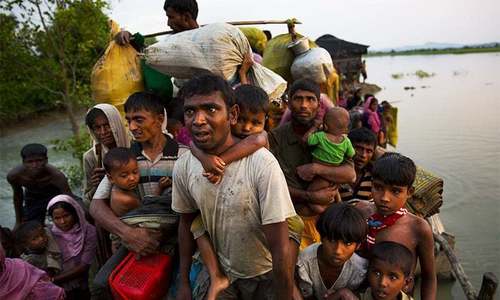
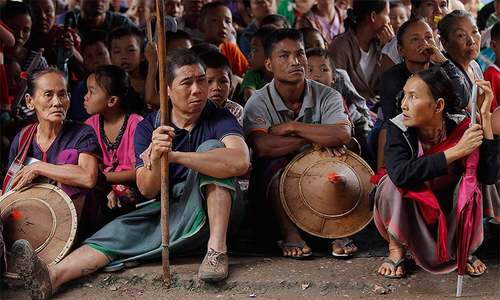
UN investigators went into horrific detail about the atrocities allegedly committed by army troops last year in their "clearance operations" against the Rohingya, which forced more than 700,000 of the stateless Muslims to flee over the border into Bangladesh.
Troops, often aided by ethnic Rakhine mobs, committed murder, rape, arson and torture, employing unfathomable levels of violence and with a total disregard for human life, they concluded.
The military has denied nearly all wrongdoing, justifying its crackdown as a legitimate means of rooting out Rohingya militants.
Myanmar's civilian government, led by Aung San Suu Kyi, had already rejected the report's finding as "one-sided" and "flawed" and dismissed a separate decision at the criminal court that found it had jurisdiction over the crisis.
Suu Kyi's civilian government shares power with the still mighty army, which has retained control over a quarter of parliamentary seats and three key ministries since the nation emerged from direct junta-rule in 2011.
The UN team also criticised the Nobel Laureate's government for "acts and omissions" that had "contributed to the commission of atrocity crimes".