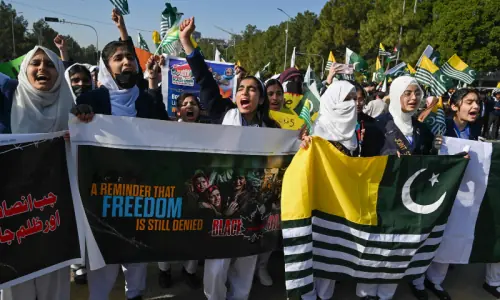
NEW DELHI: About 1,000 people protested near India’s Parliament on Thursday demanding the immediate release of five prominent rights activists who were arrested for alleged Maoist links in a countrywide crackdown this week.
The protesters warned that freedom and liberty would be endangered if people don’t resist such measures by Prime Minister Narendra Modi’s government.
India’s top court on Wednesday granted some relief to the five activists, ordering that they be kept under house arrest instead of in police custody until it rules next week on a petition challenging their detentions.
Those arrested on Tuesday were Telugu-language poet Varavara Rao in Hyderabad, Vernon Gonzalves and Arun Farreira in Mumbai, and Gautam Navalakha and Sudha Bhardwaj in New Delhi and a neighbouring town.
Police have accused the five of delivering speeches that triggered protests and violence between low-caste Dalits and right-wing groups near Pune in December.
Police in Pune said they have evidence suggesting there was a plan by Maoists to target the country’s “highest political functionaries,” without providing any details, the Press Trust of India news agency reported.
It quoted police officer Shivajirao Bodkhe as saying that investigators also have evidence suggesting the arrested activists have links with Kashmiri separatists who are fighting against Indian rule in the disputed Himalayan territory.
Leading Indian authors, lawyers and civil society leaders on Thursday demanded action against the police for what they called illegal arrests and an attack on the right to dissent.
Author Arundhati Roy said the activists represent the interests of millions of people, “so by arresting these people, you are arresting and silencing and stripping away the constitutional rights of whole populations.” The government says Maoist rebels, who are active in several states, are India’s biggest internal security threat. The rebels, inspired by Chinese revolutionary leader Mao Zedong, have been fighting the government for more than four decades, demanding land and jobs for the poor and indigenous communities.
Published in Dawn, August 31st, 2018