Rohingya demand justice after UN probe calls for genocide prosecution



Rohingya leaders in Bangladesh on Tuesday challenged the United Nations to ensure Myanmar's generals stand trial after investigators called for top military commanders to be prosecuted for genocide against the minority.
A UN fact-finding mission into violations in Myanmar said the country's army chief and five other senior brass should be investigated over a brutal crackdown last year that drove 700,000 Rohingya Muslims into Bangladesh.
The report commissioned by the UN Human Rights Council detailed a horrifying list of atrocities against the Rohingya, including murder, enforced disappearance, torture, and sexual violence “perpetrated on a massive scale.”
Estimates that 10,000 were killed in the 2017 crackdown were “conservative”, investigators said.
Myanmar has vehemently denied the allegations, insisting it was responding to attacks by Rohingya rebels.
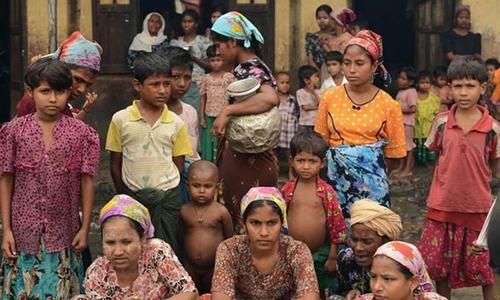
Community leaders for the roughly one million displaced Rohingya in southern Bangladesh welcomed calls for prosecution, but said they would judge the UN on its ability to deliver justice.
“The UN has to ensure that justice sees the light,” Rohingya community leader Abdul Gowffer told AFP by phone.
“The commanders must face an ICC trial,” he added, referring to the International Criminal Court in The Hague.
Editorial: Rohingya protest
The investigators have called on the UN Security Council to refer the Myanmar situation to the ICC or for the creation of an ad hoc international criminal tribunal.
The Security Council has repeatedly urged Myanmar to halt military operations and to allow the Rohingya to safely return home.
But its initiatives have been limited by council member and top Myanmar ally China, who could also thwart efforts to refer the case to the ICC.
Dil Mohammad, another Rohingya leader, urged the UN to take further steps to ensure their safe return to Rakhine state, a process that has stalled with Bangladesh and Myanmar blaming each other for the delay.
“It already took a year to reach this UN ruling,” said Mohammad, who lives in a strip of no-man's land near the Bangladesh-Myanmar border with 6,000 other refugees.
“Many things need to be done very quickly so we can return to our land in dignity and safety,” he told AFP.
The investigators were never granted access to Myanmar and based their findings on interviews with 875 victims and witnesses, as well as satellite imagery and authenticated documents, photographs and videos.