Half the Rohingya children who crossed into Bangladesh without their parents were actually orphaned by violence in Myanmar and not separated from them during the refugee exodus as previously thought, new research showed on Thursday.
The findings from international charity Save the Children have dashed a long-standing belief that thousands of 'lost' children in the world's largest refugee camp might one day be reunited with their parents.
There are more than 6,000 children known to aid workers in the Bangladesh camps who never found their parents after fleeing a brutal army crackdown in Myanmar that has been likened to ethnic cleansing.
Humanitarian agencies say the real number is impossible to know but some estimates run higher, as many children disappeared into the enormous camps to live with relatives or neighbours once they crossed the border alone.
Some came on their own and were placed in temporary care.
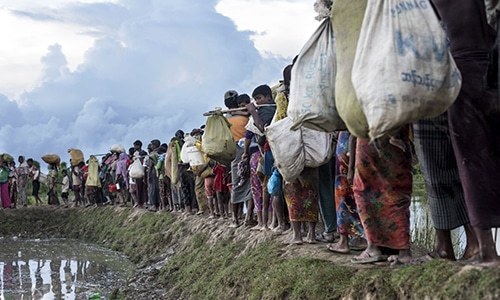
Efforts to reconnect these children with their parents have been under way since 700,000 Rohingya Muslims were expelled from Myanmar a year ago.
Read: Promises Myanmar never kept
But this latest data — gleaned from more than 100 cases of unaccompanied and separated minors in the largest study of its kind — suggests half these children were orphaned before they even arrived, and that many witnessed their parents' violent murders.
"We knew it was bad, but not this bad. Even experienced child protection managers were shocked by the findings," said Beatriz Ochoa, humanitarian advocacy manager for Save the Children in Cox's Bazar.
"This is going to have a profound implication on our work. Some of these children watched their parents die. Can you imagine?"
Lost generation
Jubeda Begum has been caring not just for her own infant, but also for her young niece and nephew after she said her sister Rozia was murdered with her husband during an army sweep in their village last year.
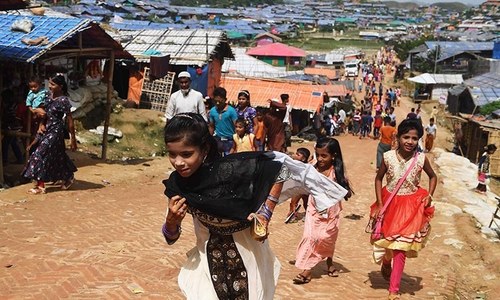
The orphaned children, aged 8 and 7 years, were surrounded by family and playmates in the bleak confines of their refugee shanty town, but trauma simmers beneath their smiles.
"They both miss their parents a lot. They often cry for their father and mother," 25-year-old Jubeda told AFP in the doorway of her shack where the wider family of 10 live under one tarpaulin roof.
The Rohingya crisis has been marked by its appalling impact on children.
Sixty percent of the civilians pursued by Myanmar forces and armed Buddhist militias into destitution in Bangladesh were children, aid groups say.
Their lives in the unsanitary, cramped and lawless terrain of Cox's Bazar has fostered a "fatalism" about their future, UNICEF said in a new report on Thursday.
"Older children and adolescents who are deprived of opportunities to learn or make a living, are at real risk of becoming a 'lost generation', ready prey to traffickers and those who would exploit them for political or other needs," the report stated.
Orphans and unaccompanied children are particularly vulnerable to abuse and neglect and are treated as high-priority cases, child protection workers say.
In the bleak camps — where nearly a million Rohingya displaced by decades of violence live hand to mouth — caring for these youngest victims often falls to family.
"We all take care of him," said Mohammad Issa, gesturing to his six-year-old cousin Tarek who has lived with his family since the boy's parents were killed in Myanmar.
"We do not let him feel the lack of parents. But still, he sometimes misses them."