Although picking the winner in any constituency is a tricky business, a number of seats are more unpredictable than others. An overview of the contest in National Assembly constituencies suggests there are at least 50 seats where a heavyweight is pitted against an equally strong rival.
With candidates of the stature of Imran Khan, Shahbaz Sharif, Sirajul Haq, Bilawal Bhutto-Zardari, Shah Mehmood Qureshi, Syed Yousuf Raza Gilani and Shahid Khaqan Abbasi contesting the elections, who will turn out to be the winner remains anybody’s guess. One thing, however, is a foregone conclusion — many big names will bite the dust on Wednesday.
A tough contest is expected in some constituencies of Swat, Lower Dir, Malakand, Islamabad, Rawalpindi, Lahore, Multan and Karachi. Perhaps this very uncertainty has made many party heads and other prominent leaders contest multiple seats to raise the probability of their victory.

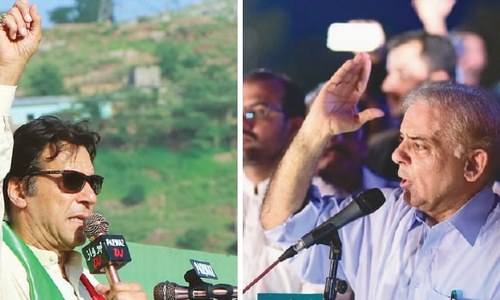
PTI chief Imran Khan is contesting in five National Assembly constituencies from Islamabad, Karachi, Mianwali, Lahore and Bannu. He is facing former prime minister Shahid Khaqan Abbasi in Islamabad’s NA-53 and Khawaja Saad Rafique, the former minister for railways and firebrand PML-N leader, in Lahore’s NA-131 constituency.
Imran Khan is also likely to face a tough time in Bannu, where his main rival is former KP chief minister Akram Khan Durrani.
Shahbaz Sharif, the PML-N president, is contesting the elections on four NA seats — Karachi, Swat, Dera Ghazi Khan and Lahore.
Bilawal Bhutto-Zardari, the PPP chairman, is in the race from his native Larkana, Karachi and Malakand. His father Asif Zardari is contesting the polls from Shaheed Benazirabad district.
Unlike the PML-N and the PTI’s heads who dared to try their luck in Sindh, Mr Zardari and Bilawal opted to stay away from Punjab, underlining the erosion the party has suffered in the country’s most populous province.

In Karachi’s NA-243 constituency, Imran Khan is facing Shehla Raza, the former deputy speaker of the Sindh Assembly and PPP leader, in addition to Syed Ali Raza Abidi of the MQM and Muzammil Qureshi of the Pak Sarzameen Party (PSP).
Unlike the previous elections, 2018 has seen the emergence of religious groups, the revival of Muttahida Majlis-i-Amal, formation of the Grand Democratic Alliance in Sindh and a major chunk of ‘electables’ switching sides.
With the PTI becoming a formidable force and joining the PML-N and the PPP as a major party with a nationwide vote bank, today’s elections will decide who grabs the baton to lead the nation for the next five years.
Following are the constituencies where prominent politicians, including the party heads, are contesting the elections. Due to paucity of space, the names of all candidates in the constituencies have not been mentioned.
Published in Dawn, July 25th, 2018