ACROSS the country, women candidates are poised to run in greater numbers for political office in the coming general election than previously.
However, only if political parties unreservedly nominate and support competent women for winnable constituencies will the trend become a permanent feature of national politics.

Challenged by various obstacles, including well-funded and highly electable male opponents, and with patriarchal dictates barring female candidature, mainstream parties must not succumb to right-wing pressure aimed at preventing women from becoming legislators.
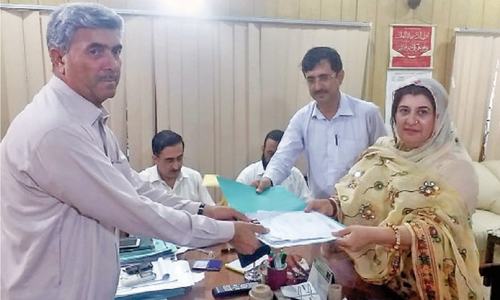
The PPP has awarded electoral tickets to a dozen women on general seats; the PML-N has nominated 11 women candidates, while the PTI has given 16 female contestants the go-ahead, including nine for provincial seats.
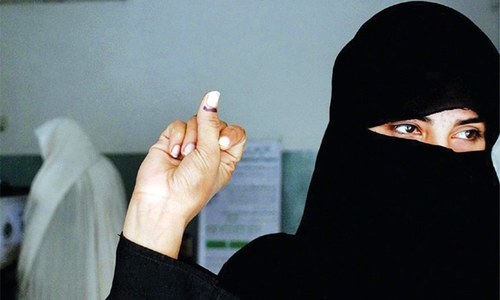
In a welcome first, the PTI has also nominated a woman from Upper Dir, a constituency traditionally notorious for barring women voters. It has also nominated two women from Mansehra — but this has caused certain male party members to threaten protests.
Though there is more energy and momentum on the part of women who want to participate, independent candidates included, the question is whether that translates into more of them winning. Yes, but only if political parties invest in them.
To begin with, parties must award electoral tickets to women for at least 5pc of the general seats as mandated by Election Act, 2017.
Consider the results of the 2013 election. Of the 419 women contesting, most were new political entrants; 259 ran as independents and 160 were awarded party tickets.
Of the 228 women legislators in the national and provincial assemblies, 205 were nominated on reserved seats; 21 women won after contesting; and two women were selected for non-Muslim seats.
For political parties, then, to increase female electoral participation it makes sense to nominate experienced (reserve seat) legislators as aspiring electable candidates.
Meanwhile, gender quotas or reserved seats are a means of bringing female leadership into politics where women are otherwise excluded, shortening a process that could otherwise take generations.
Incentivising women to enter mainstream politics, parties must support such female candidates who receive little financial support.
To end, because partisan politics comes into play while allocating reserved seats (after the PML-N’s list of reserved seats was announced recently, the party was accused of nepotism by women party members), political parties should refrain from nominating female relatives of loyalists.
It would be much better for the democratic process if parties were to encourage deserving women politicians to run.
Published in Dawn, June 15th, 2018