0
0

KARACHI, May 27: Speakers at a discussion on Friday urged the peace activists of India and Pakistan to continue to put pressure on their respective governments regarding on-going peace process so that a sustainable peace could prevail in the subcontinent. Speaking at the discussion on “Imperatives of denuclearization and the peace process”, organized jointly by the Pakistan India People’s Forum for Peace and Democracy and the Aurat Foundation at the Rafia Chaudhry Auditorium, they stressed that if there was no pressure, peace process might derail.
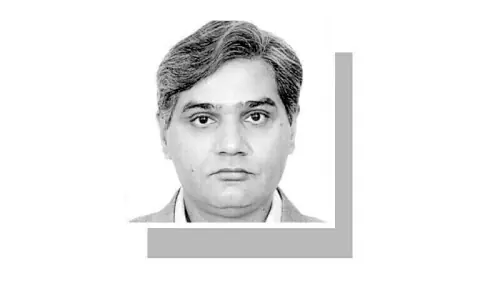
The discussion was organized on the eve of 7th anniversary of the Pakistan’s nuclear testing carried out on May 28, 1998. Brig A. R. Siddiqui, columnist M. B. Naqvi, journalist Zubaidah Mustafa, cartoonist Mohammad Rafiq “Feica”, teachers of Karachi University Jaffer Ahmad and Nausheen Wasi, Anis Haroon and others also spoke.
They pointed out that no home work had been done prior to starting the peace process, as one could remember that emotions were running high just before this process began, but then all of a sudden some specific international conditions persuaded both the governments to start the peace process, so it was feared that if the situation changed, there was a possibility that the peace process could be reversed by the vested interest.
They said a large number of textbooks of both the countries were infested with material fanning hatred, and it is high time that both the governments should evolve a policy to review and revise syllabus so that the younger generations in the region grow up with a clean mind.
They said that the government should know that the weapons do not provide sustainable security, which could only be achieved by strengthening human resources. They suggested that the nuclear armament level between both the countries be lowered.
They said with the bomb the country has become even more vulnerable. They said at present the world powers needed Pakistan in their war against terror, what guarantee was there that there would not be a repeat action of the 1984 Baghdad attack when Israeli air force, with surgical precision, wiped out Iraq’s nuclear facility.
They said that confidence among the masses of both the countries could not be built up by keeping nuclear arsenal and its delivery systems, which were being updated and improved every now and then. They said that the jehadis and the religious extremists parties in both the countries were a serious threat to peace.
They said bulk of the resources of both the countries were being spent on non developmental sectors like defence, while the social sectors like health, education etc were not given due priority.
They said that efforts be made to improve the economic conditions of the masses so that they could get the basic amenities, and their human rights were not violated.
They said that cities and urban centres in both the countries were so near to the border that nuclear bombs could not be used as, with the change in the wind direction, the fall-out could affect the areas and human settlements across the border, so the claim that nuclear weapons acted as a deterrent was not correct.
They also expressed doubts on the statements that nuclear assets were safe and secure, and said only a few days back some parts had been stolen from the KANUPP, which is also a nuclear facility.
A brief question-answer session also followed the speeches.
The peace activists after the discussion also organized a candle-lit peace vigil and the participants marched from the auditorium to the Press Club.