THE murder a few months ago of a young man from South Waziristan — days after parliament had extended the jurisdiction of superior courts to the tribal areas — once again underscored the need for expediting the move to bring Fata’s people into the mainstream.
While the staged encounter took place in Karachi, Fata’s tribespeople view Naqeebullah Mehsud’s killing as emblematic of their collective experiences under draconian colonial-era laws, exacerbated by problematic aspects of our counter-insurgency efforts.
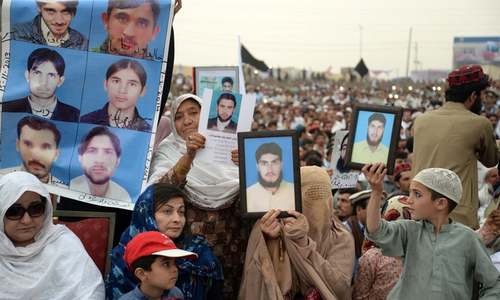
It has galvanised a peaceful, rights-based Pakhtun movement that, two months in, continues unwaveringly, as seen in the large rally in Peshawar yesterday. The state ought to read the tea leaves and ameliorate their disaffection. For its part, the military has pledged to demine the area and replace Watan cards with CNICs.
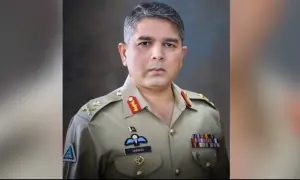
Last week, during a visit to South Waziristan, army chief Gen Qamar Bajwa met Naqeebullah’s father to assure him of justice for his son. He also claimed that the area had entered a phase of stability and development. Such an outcome, however, is unsustainable with a security-oriented institution behind the wheel of the mainstreaming drive in Fata.
As the clock winds down on the PML-N’s current tenure, among its most consequential failures has been the party’s inability to implement the National Action Plan’s recommendation to introduce reforms in Fata.
Undoubtedly a behemoth challenge, and albeit worsened by poor civil-military cooperation, it is primarily to blame for consistently caving into the political pressure of its coalition partners, the JUI-F and PkMAP — even as a sizeable section of the tribes are expressing their discomfort with the status quo that these parties’ leaders seek to preserve.
Read: Reforms for peace
As this paper has stated before, the aforementioned bill has significant issues, not least of which is that it does not repeal provisions of the Frontier Crimes Regulation. The previously introduced rewaj bill was also controversial for giving legal sanction to anti-women practices.
But with every reform attempt, the PML-N has dithered as its allies have cried ‘too much’ while the opposition complains ‘not enough’.
All sides must put an end to political point-scoring at the expense of a marginalised people, and get back to basics. Empowering Fata’s stakeholders (especially women) — by seeking their consensus, granting equal rights and restructuring the civil administration to resemble what exists elsewhere in Pakistan — must be the keystone of a policy that all parties commit to maintaining, even after the transition of power to a newly elected government.
All of Fata’s people deserve to be heard, not just those who have hitherto claimed a monopoly over articulating their aspirations.
Published in Dawn, April 9th, 2018