IT is a case of a promise made and not kept, at least so far.
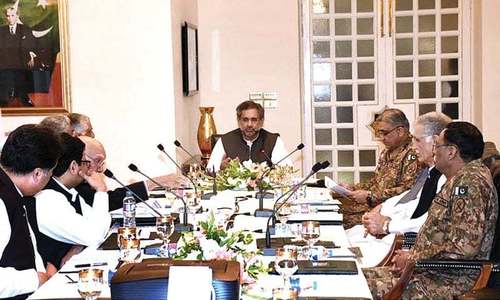
Soon after becoming prime minister, Shahid Khaqan Abbasi pledged to implement Fata reforms that the federal cabinet had approved in March. Former prime minister Nawaz Sharif had stalled his own government’s recommendations on Fata because of the political opposition of allies, notably Fazlur Rehman of JUI-F and Mahmood Achakzai of PkMAP.
It now appears that the resistance to Fata reforms has outlasted Mr Sharif’s period in office and continued into Mr Abbasi’s tenure, further undermining the current prime minister’s standing.
Explore: The Fata merger — Towards a brave new world
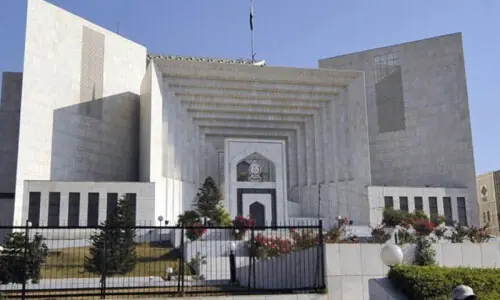
The bill that was to be presented in the National Assembly is a historic landmark and perhaps the least controversial aspect of Fata reforms: extending the jurisdiction of the Peshawar High Court and the Supreme Court to Fata. How is it that a judicial milestone, one that every right-thinking and sensible person ought to embrace, has been thwarted by dismal political opportunism?
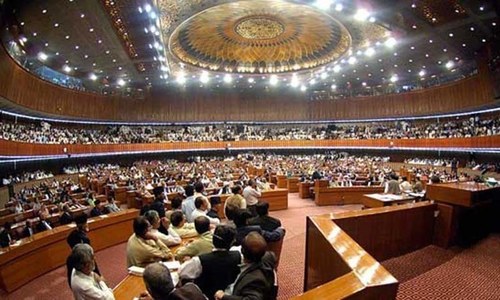
The PML-N parliamentary management was particularly shambolic. First included in the National Assembly’s official agenda for Monday and then mysteriously crossed out overnight, PML-N leaders in the house made no effort to explain why the bill had been withdrawn and made yet more dubious promises that it would be included in the agenda within days.
The opposition in the National Assembly was rightly aggrieved, creating the rather strange spectacle of opposition parties vociferously supporting a government bill that the government itself is reluctant to support.
Indeed, the remarks by several opposition leaders that the PML-N has unfailingly disappointed and undermined parliament with its almost undemocratic attitude towards the people’s house have an uncomfortable ring of truth. Democratic institution building is based on respecting rules and promoting good norms. Parliament’s real strength is drawn not from its power to elect a prime minister, pass a budget or amend the Constitution; it is drawn from the perception that the people’s representatives are promoting the people’s interests.
What could be in the greater interest of the people of Fata than extending the jurisdiction of the Peshawar High Court and Supreme Court to a region where colonial-era rules still prevail?
The danger is that with a general election looming, the PML-N may sacrifice Fata reforms altogether to appease political allies in what is expected to be a fiercely competitive poll climate.
There is no credible alternative that those opposing Fata reforms have presented. Indeed, the opposition is mostly behind closed doors with few politicians willing to speak publicly and frankly about their reservations.
The Fata reforms package has already been somewhat diluted by the decision to promote a so-called mainstreaming of the region before considering the issue of a merger with KP. Narrow political interests and myopia should not be allowed to derail Fata reforms.
Published in Dawn, December 13th, 2017