0
0
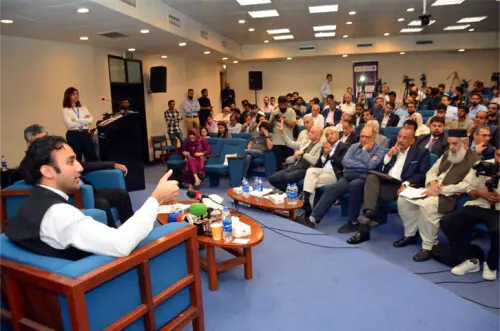
HYDERABAD, May 18: A seminar on “Health for all - now” has proposed to allocate seven per cent of the GDP for providing healthcare to people and making non-functional health facilities operational. The seminar was organized by the People’s Health Movement, Sindh chapter, at the press club here on Monday. Members of civil society organizations, health professionals and others attended the seminar.
The seminar suggested that an evaluation of the polio programme should be conducted to assess constraints of the programme.
It said a systematic monitoring system should be established with focus on community participation for healthcare.
It said mushroom growth of private medical institutions should be checked.
Speakers at the seminar observed that Pakistan’s human development, including health indicators, could not be compared with developing neighbouring countries. They said Pakistan stood at number 142 out of 177 countries of the world as per human development index.
The executive coordinator of HANDS, an NGO, and People’s Health Movement focal person for Sindh, Dr Tanvir Ahmad Shaikh, said half of the population of Pakistan was illiterate, life expectancy in the country was lower than many developing countries and about 32.6 per cent of the population was living below the poverty line. He said 40 per cent of the population was living in one-room houses without basic facilities.
He said Pakistan’s infant mortality rate was 82 per 1,000 and maternal mortality was 350-500 per 100,000.
Dr Shaikh said the country was also facing the outbreak of hepatitis, leishmaniasis, tuberculosis and malaria while the polio eradication target was yet to be achieved.
He pointed out that Pakistan was a signatory to the Alma Ata declaration, 1978, which envisaged health for all by the year 2000. He said this target had also not been achieved.
Programme coordinator and People’s Health Movement national focal person Dr Talib Lashari spoke on health indicators in the country and stressed the need for a comprehensive national health policy.
Dr Furqan of the Pakistan Medical Association praised the Sindh government for announcing a health policy but said the policy was more about setting guidelines, instead of ensuring concrete steps to implement the policy.
SPSC: The Sindh Public Service Commission has announced names of eligible candidates who were interviewed by the commission for posts of lecturer in botany in the Sindh education and literacy department.
The commission recommended names of 15 male and 17 female candidates to the government for appointment against the posts.