7
7

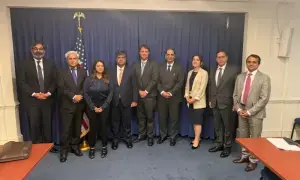
IN times of US presidential turmoil or disinterest, the vice president can become more influential in policy debates. That was certainly the case in the administration of Republican president George W. Bush, whose hawkish vice president, Dick Cheney, helped march the US into a disastrous war in Iraq. Democratic president Barack Obama’s reluctance to wade deeper into America’s wars abroad, in Iraq and Afghanistan, gave his vice president, Joe Biden, an important voice in foreign policy and national security debates. With President Donald Trump endlessly mired in scandal and disarray, Vice President Mike Pence, a conservative figure otherwise mostly focused on domestic policies, may be slowly asserting himself in foreign policy and national security debates that his president is disinclined towards. If so, a surprise meeting in Mr Pence’s official residence in Washington D.C. between the vice president and Pakistani Prime Minister Shahid Khaqan Abbasi may be one of the more quietly effective diplomatic engagements between the two countries in recent times.
While neither side has officially commented on the meeting, officials have indicated that it was wide-ranging and useful for bilateral engagement. Concern reportedly expressed by Mr Pence about the abuse of certain religious laws in Pakistan and the growing influence of China in this country suggests that substantive issues were discussed. The focus, however, undeniably remains Afghanistan and bringing an end to the war in that country. While both Pakistan and the US desire the same end, the countries differ on strategy. In recent days, however, there are encouraging signs that the US is recognising that international consensus, which includes Pakistan and now Kabul, is right: the Afghan Taliban will not be bludgeoned into surrender or talks; instead, a political settlement among Afghanistan’s power centres should be urgently pursued. If Mr Pence is able to inject greater urgency and purpose into US diplomatic efforts and help create the conditions for an intra-Afghan dialogue with the assistance of Pakistan, a historic peace could be a step closer to becoming reality.
As attacks continue to occur inside Pakistan and Afghanistan, the long impasse has become clearer than ever. Meaningful peace that will allow the region to make significant economic, social progress is impossible without reciprocal action and considerations between Pakistan and Afghanistan. The anti-Pakistan militant sanctuaries in Afghanistan are a clear impediment to peace and stability inside Pakistan. Meanwhile, Pakistan’s influence over the Afghan Taliban should be used to inexorably make an intra-Afghan dialogue a reality. The US is an important actor in both those processes and the choices the Trump administration makes could deepen or alleviate Pak-Afghan problems. Mr Abbasi’s low-key approach could be a boon both in the relationship with the US and institutional tensions inside Pakistan. A hopeful nation and people regionally await whoever can help deliver peace.
Published in Dawn, March 18th, 2018