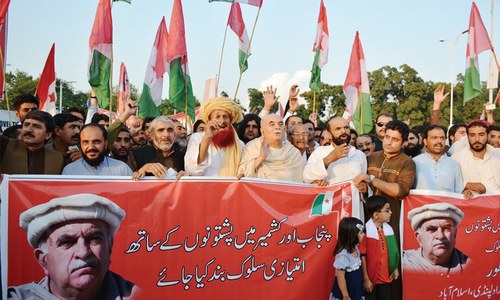
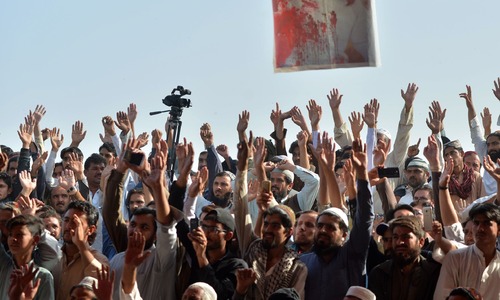
Leaders of a Pakhtun protest demanding equal rights for the ethnic community were booked in Balochistan's Killa Saifullah on Tuesday.
The Killa Saifullah station house officer filed a first-information report against Pashtun Tahaffuz Movement (PTM) leaders Manzoor Pashteen, Haji Hidayatullah, Ali Wazir, Khan Zaman Kakar, and former Balochistan minister and serving legislator Nawab Ayaz Khan Jogezai, among others.
The PTM leaders were booked under Sections 153 (provoking with intent to cause riot), 153(a) (Promoting enmity between different groups), and 34 (Acts done by several persons In furtherance of common intention) of the Pakistan Penal Code read with Section 109, which prescribes the punishment of abetment if the act abetted is committed in consequence of the abetment and where no express provision is made for its punishment.
The PTM has recently organised protests in different parts of the province, including Zhob and Killa Saifullah, against alleged enforced disappearances, extrajudicial arrests and killings, as well as the mistreatment of the Pakhtun community by security forces.
Reports of Pakthun protests in Islamabad first made headlines following the extrajudicial killing of Waziristan native Naqeebullah Mehsud — a shopkeeper and aspiring model — in Karachi.
According to a recent New York Times column penned by a writer from Waziristan, Mehsud's murder became a tipping point that compelled young Pakthuns to gather and protest against 16 years of frustration and pain caused by the rise of militancy.
The column said militancy in Khyber Pakhtunkhwa and the tribal areas, and subsequent counter-terror operations, caused millions to be displaced from their homes, with residents plagued by arbitrary detentions, extrajudicial killings, enforced disappearances, and the loss of homes, livelihoods and lives.
Leaders of PTM — which is an organisation working for the rights of those affected by war on terror in Tribal Areas especially those from South Waziristan — claim that in the past decade, 32,000 Pashtuns have gone missing from the Federally Administered Tribal Areas. They insist that their struggle was to ensure implementation of the Constitution under which the law-enforcement agencies are supposed to provide details of the people they pick up and present them before courts.