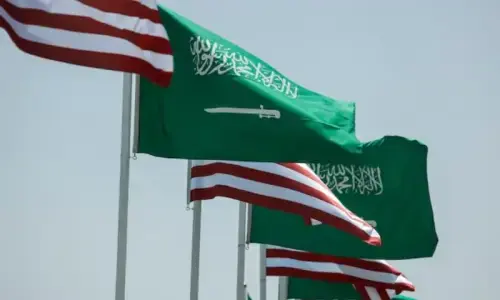
SAUDI Arabia, custodian of the most sacred sites of Islam and the Arab world’s most important economy, has been experiencing rapid changes over the past few years, particularly since the death of King Abdullah in 2015.
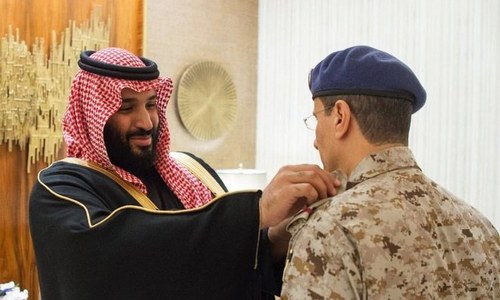
These changes encompass domestic issues, such as increased rights for women and more relaxed social norms, as well as external postures, most notably a more muscular foreign policy emanating from Riyadh. The driving force behind the kingdom’s rapid changes is Crown Prince Mohammed bin Salman, an ambitious royal who has swept aside potential challengers and power centres with stunning speed.
Read: Reformist crown prince with firm vision
Last year, the prince had rounded up a number of royals as well as leading business magnates to probe them for ‘corruption’; most of the detainees have only recently been released. Another shake-up was orchestrated late on Monday with the government sending the military’s chief of staff, as well as a number of other senior generals packing, while changes were also made in political offices.
Perhaps the change in the military’s top brass reflects frustration over the Yemen war — a war the crown prince has been instrumental in launching and overseeing as defence minister. However, after nearly three years of hostilities, the Riyadh-led coalition is far from defeating the Houthis.
Read: Don’t dare mention Yemen
In the social sphere, the prince has lifted the ban on women driving, while a recent report also said that women could join the military. Moreover, Riyadh and Jeddah have of late been serenaded by jazz musicians, opera artists and rappers, as the government plans to pump millions of riyals into promoting entertainment activities.
Perhaps only a year ago, such entertainment activities would have been hard to imagine. The relaxation of social norms and promotion of women’s rights are welcome. For too long, Saudi Arabia’s moral compass has been in the hands of a group of ultra-conservative clerics who have clamped down on all things fun. However, greater social freedoms must be accompanied by more political freedoms.
Allowing song and dance while crushing dissent does not indicate a progressive direction.
In the same period that Saudi Arabia has been experiencing a moment of cultural glasnost, the state apparatus has clamped down on numerous government critics, including clerics and civil society activists, for disagreeing with the state, or criticising foreign policy.
The crown prince must realise that an open, modern society cannot be built unless people have the freedom to speak their mind and criticise their government.
Published in Dawn, February 28th, 2018