‘Cleared’ Nasheed vows to challenge Maldives president in polls

COLOMBO: The exiled former leader of the Maldives vowed on Friday to run for president after the Supreme Court quashed his conviction, dealing a major blow to the ruling regime.
Mohamed Nasheed, the country’s first democratically elected president, has urged the government to respect the top court’s shock decision to overturn the convictions of nine dissidents and order the release of those serving jail sentences.
On Friday, he said the ruling cleared the way for him to return to the Maldives, a South Asian atoll nation known as a honeymooners’ paradise. “I can contest and will contest,” he said in the Sri Lankan capital Colombo.
“We must set up proper procedures for inclusive, free and fair elections with full international observation.” Nasheed, 50, said the government should withdraw the troops deployed inside the parliament since July last year, when a dozen MPs from President Abdulla Yameen’s party defected and attempted to impeach the pro-government speaker.
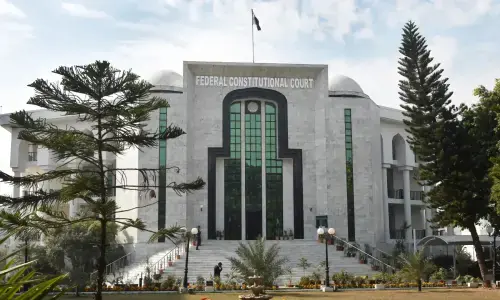
The Supreme Court on Thursday reinstated the 12 legislators who were expelled for defecting, and effectively gave the opposition a majority in the 85-member assembly.
The United Nations, Australia, Britain, Canada, India and the United States welcomed the court’s decision as a move towards restoring democracy in the politically troubled Indian Ocean nation.
“I urge the Government and security services to respect this ruling, which bolsters #democracy and #RuleOfLaw for all Maldivians,” tweeted Atul Keshap, the US ambassador to Sri Lanka and the Maldives.
However, the Maldivian government made it clear on Friday evening that it had concerns about releasing those who had been convicted for “terrorism, corruption, embezzlement, and treason”.
President Yameen’s office said Attorney General Mohamed Anil has raised the administration’s concerns with the Chief Justice.
“The Attorney-General stated that the administration has highlighted concerns over the consequences that maybe presented in the immediate implementation of the court’s ruling,” the statement said.
Nasheed’s Maldivian Democratic Party (MDP), which has criticised the country’s “highly corrupt judiciary” in the past, saw the unexpected decision as the “end of Yameen’s authoritarian rule”.
He was barred from contesting any election in the Maldives after a controversial 2015 terrorism conviction widely criticised as politically motivated.
The Supreme Court said that the “questionable and politically motivated nature of the trials of the political leaders warrant a retrial”. Nasheed urged the government to respect the verdict.
The beleaguered administration said it had not been heard by the Supreme Court and did not say when it would fully comply with the landmark ruling.
Published in Dawn, February 3rd, 2018