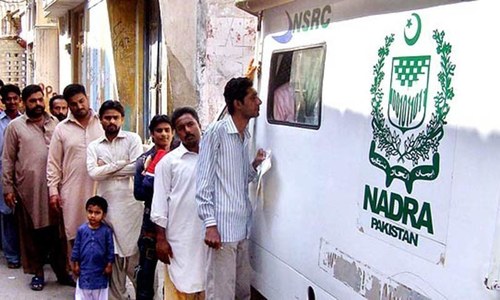
ISLAMABAD: The Islamabad High Court (IHC) on Thursday scrapped the process for the appointment of the National Database and Registration Authority (Nadra) chairman.
The federal government informed the court that the summary for the appointment of the Nadra chairman had been withdrawn to accommodate an appellant.
An IHC division bench comprising Justice Athar Minallah and Justice Miangul Hassan Aurangzeb ruled against the criteria for the appointment, according to which the maximum age limit for the post had been reduced to 55 years.
Court rules against criteria under which maximum age limit for post was reduced to 55 years
A serving Nadra director general, retired Col Mohammad Talha Saeed, had challenged the change in the selection criteria, claiming it was introduced to eliminate him from the competition because he was also a candidate for the position.
Khurram Hashmi, Mr Saeed’s counsel, argued before the court that the age limit for the post had been arbitrarily fixed at 55 years, which he has exceeded. The counsel alleged that the age was reduced to exclude qualified candidates from applying against a post purely on the basis of age without offering any justification.
He said that the retirement age of the Nadra chairman had been fixed at 65 years and it could therefore, be argued that a maximum age limit of 62 years could potentially be imposed as a candidate beyond the said age would be unable to serve a full term.
According to the petition, the federal government could make changes in the selection process but this prerogative must be exercised judiciously and in keeping with the doctrine of structured discretion. It is, therefore, submitted that if an age limit were to be imposed for the post in question it must be based upon clear and objective justifications.
The petition was initially heard by a single-member bench comprising Justice Shaukat Aziz Siddiqui, who dismissed it after a preliminary hearing.
Mr Saeed then filed an intra-court appeal before the two-member division bench.
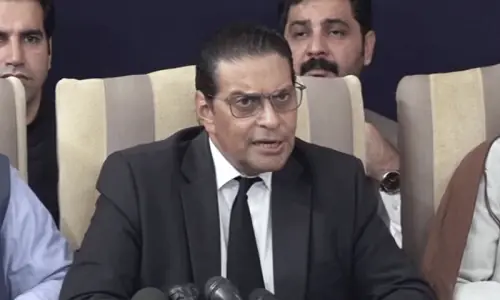
During Thursday’s hearing, Additional Attorney General Afnan Karim Kundi appeared to represent the federal government.
The court was about to issue a stay order in this matter, however, Mr Kundi was asked to seek instructions from the federal government to redress the petitioner’s grievance.
After a brief adjournment, the bench resumed the hearing, where Mr Kundi informed the court that the interior ministry had agreed to consider Mr Saeed’s case for the post.
He said the interior ministry had withdrawn the summary and the process would be re-initiated and Mr Saeed would be considered for the position. He told the court that Mr Saeed had already applied for the post of Nadra chairman, however, he was not shortlisted because he was overage.
However, when the court directed him to include Mr Saeed’s name for this position, Mr Kundi reminded the bench that the tenure of incumbent chairman Usman Yousaf Mobin is going to expire on Feb 5, after which Nadra would become dysfunctional.
The bench reminded him that it would not accept induction through a flawed process.
Mr Mobin, who completes his tenure on Feb 5, was among the top candidates whose names has been shortlisted and forwarded by the interior ministry to the prime minister for the position.
Reportedly as many as 183 people, including three from within Nadra, had applied for the post that was advertised on the basis of a decision taken by the federal cabinet.
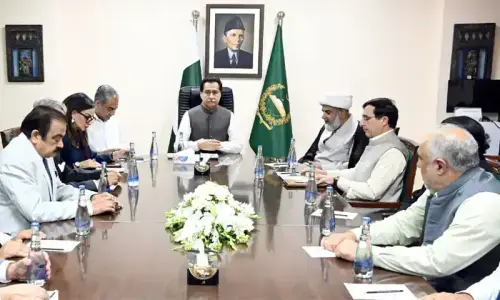
Five of the six shortlisted applicants were interviewed by a high-level committee, headed by Interior Minister Ahsan Iqbal. Other members of the committee include interior secretary, additional secretaries of the ministries of interior, finance, law, the Establishment Division, and two members of the Nadra board.
Besides Mr Mobin, Dr Khawar Siddique Khokhar, Mohammad Amir Malik, Syed Iftikhar Hussain Shah and Mohammad Sarwar Gondal were also called for interviews.
Published in Dawn, February 2nd, 2018