SC warns Missing Persons Commission over slow progress on pending cases

Published
1

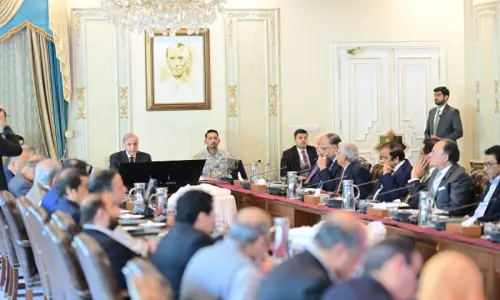
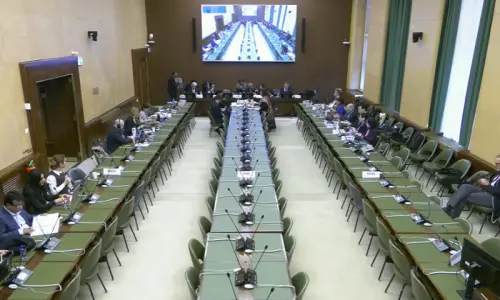
Supreme Court Justice Ejaz Afzal on Tuesday warned the Missing Persons Commission that the court would take notice of body's slow progress on pending cases.

Justice Afzal, part of a three-member SC bench, issued the warning as the court heard an ongoing case on missing persons.

The Missing Persons Commission submitted a report in court today on cases pending before the body, including those pertaining to Masood Janjua and Ahmad Faraz.

The report revealed that of the 4,608 missing persons cases that came to it, 3,076 have been wrapped up and only 1,533 remain pending.

The commission told the court that production orders have been issued for missing persons Mudassir Iqbal, Gulmeed Khan, Naveedul Rehman and Abdul Rehman.

The SC bench directed the commission to tie up all pending cases, adding that the court would continue to keep its doors open to missing persons cases. "The court will take notice of a lack of progress shown by the Missing Persons Commission."

Editorial

Blue wave
Updated 05 Nov, 2026

Blue wave

While Trump does not usually learn from his errors, perhaps seeing the response of the American voters he may attempt a wiser course.
New LPG policy
05 Nov, 2026

New LPG policy

EACH winter, millions of working-class households across the country face the same ordeal. LPG, long considered the...
Polio’s other victims
05 Nov, 2026

Polio’s other victims

FOR decades, Pakistan has vowed to eradicate polio. Billions have been spent on logistics and awareness drives. Yet...
Electoral reform
Updated 04 Nov, 2026

Electoral reform

The real problem is the gulf between the statute book and what happens on polling day, not the laws.
Competing demands
04 Nov, 2026

Competing demands

THE climate crisis is becoming harder to confront as the world develops new ways to consume scarce resources. At an...
Belated meeting
Updated 04 Nov, 2026

Belated meeting

Whether it is Imran Khan, his family members, or other incarcerated political leaders and activists, the state should not deny them their rights.