0
0

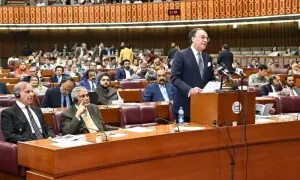
KATHMANDU: As the summit of South Asian Association for Regional Cooperation (SAARC) opened in Kathmandu on Saturday, its main purpose had already overshadowed by the heightened tension between regional rivals India and Pakistan.
The summit was originally scheduled to open on Friday, but was postponed by one day due to the late arrival in Kathmandu of President Gen Pervez Musharraf.
He had to take a long detour via Beijing to make it to Nepal since both India and Pakistan have banned each other’s aircraft from over-flying their territory.
Just that fact alone underscores the current climate of mistrust and bitterness between the two nuclear-armed neighbours, which have been locked in tensions arising from a Dec 13 attack on India’s Parliament that New Delhi blames Pakistani groups for.
As such, the 11th SAARC summit is being seen as a missed opportunity to foster meaningful cooperation between all the member states of SAARC. There were little hopes of a breakthrough between Indian and Pakistani leaders, despite a handshake between Musharraf and Indian Prime Minister Atal Bihari Vajpayee.
Vajpayee welcomed Musharraf’s offer of friendship, but continued to demand action by Islamabad to clamp down on Kashmiri fighters New Delhi says was behind the December attack that has pushed both countries to a virtual war footing.
SAARC, which groups Bhutan, Bangladesh, India, Pakistan, Nepal, Maldives, and Sri Lanka, was formed 16 years ago to combat region-wide poverty, counter terrorism and raise the living standards of the member nations.
But such issues have merely become formalities as India and Pakistan continue their hostile attitude toward one another, this latest row being the latest hurdle holding back the South Asian regional grouping. Shyam Bahadur K C, editor of the Kathmandu Post, Nepal’s most influential English daily newspaper, says, “as long as tension between the two regional rivals continues, SAARC won’t be able to make much progress on social sectors which was the main reason for its existence”.
Indeed, conflicts do little to help the sub-continent, home to 1.6 billion of the world’s people.
South Asia is one of the poorest parts of the globe where literacy is dismal, and maternal and child mortality rates are one of The highest in the world. More people die of hunger and disease in South Asia than anywhere else, except sub-Saharan Africa.
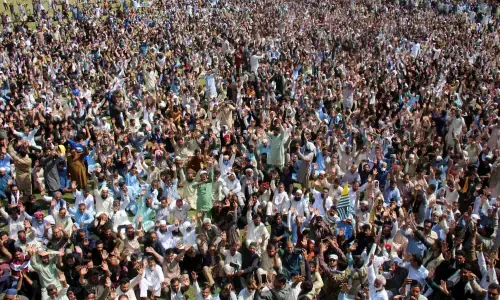
Yet, the lamentation goes, regional cooperation has been sorely lacking to combat such ills. Frustrated by the slow pace of progress on grave social issues, hundreds of peoples from across South Asia gathered in Kathmandu the past week to hold a “SAARC People’s Summit” to draw attention to these issues.
Rohit Kumar Nepali, one of the organizer of the people’s summit on Thursday, said, “We would like to draw attention of the leaders to issues of food and livelihood insecurities, to ills of human trafficking and various other forms of violence against women and children. There should not be further delay in addressing these issues.”
Dr Ram Sharan Mahat, Nepal’s finance minister who is leading the nation’s ministerial delegation to the summit, says that Nepal hopes to jump-start the “SAARC process” in Kathmandu, and bring regional cooperation back into focus after years of neglect.
As part of this agenda, the hosts have put forth two social conventintions for the leaders to adopt in this summit — one on controlling the trafficking of women and children and the other on anti-poverty measures.
Trafficking in women and children is a scourge in South Asia, particularly in nations like Nepal and Bangladesh where hundreds of young women are forced into prostitution each year by unscrupulous middlemen who sell them to brothels in India. Though bilateral cooperation to stamp out this evil exists, there is still no regional framework to address the issues. So is the case with anti-poverty measures.
If all goes well, those two conventions will be signed by the SAARC leaders before the summit ends on Sunday.
They are also to adopt a Kathmandu declaration focusing on social issues such as anti-poverty measures, economic cooperation and control of terrorism. But critics doubt the will to carry those through to the implementation phase.
“SAARC has always signed a lot of declarations and conventions,” says Dr Mohan Lohani, a Nepali commentator. “But none of those have been carried through over the years. The same could happen again.”
A glaring example is the fate of the South Asian Free Trade Area (SAFTA) conceived along the lines of the North American Free Trade Agreement (NAFTA) between the United States, Canada and Mexico.
At the last summit in Colombo in 1998, SAARC leaders agreed to adopt the final SAFTA document by the end of 2001.
But now the adoption of the document has been pushed back by a year as member nations still iron out their differences in Kathmandu.
“SAFTA assumes a very important position within SAARC,”says former foreign minister Shailendra Kumar Upadhyay. “It is not just economic cooperation, but also people to people interaction would be encouraged by SAFTA. But current tensions has overshadowed everything, even this important economic document.”
But on Saturday, as Nepal put up a festive display to mark the opening of the much-anticipated summit, these worries were forgotten briefly. “Just the fact that the summit is being held after two and half years and in these climate shows that it is an achievement of sorts,” says Upadhyay. —Dawn/InterPress Service.