UN says 582,000 Rohingya have now crossed into Bangladesh

Some 582,000 Rohingya refugees have now fled Myanmar for Bangladesh since late August, the United Nations said on Tuesday, warning that thousands more were still stranded at the border.
The UN said between 10,000 and 15,000 new refugees have arrived at the border in the last 48 hours alone, fleeing violence in Myanmar, where Rohingya villages are being burned to the ground.
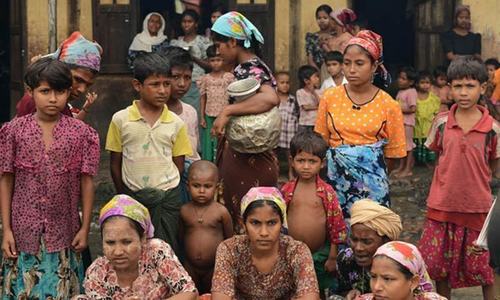
It expressed deep concern about newly arrived refugees including children and elderly people dehydrated and hungry from the long journey who are stranded near the border.
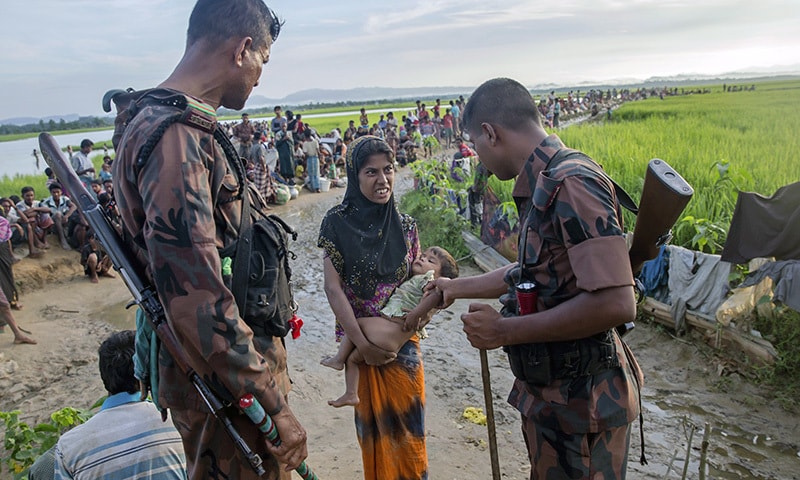
One Bangladesh Border Guard (BGB) official told AFP on condition of anonymity that the new arrivals were being held in an area of no man's land, although it was not immediately clear why.
Spokesman Andrej Mahecic said the UN refugee agency (UNHCR) was advocating with the Bangladesh authorities “to urgently admit these refugees fleeing violence and increasingly difficult conditions back home”.
He said UNHCR staff had spoken with people who described walking for a week to reach the Bangladesh border. Most are still squatting in paddy fields in Bangladesh, and were waiting for permission to move away from the border, he said.
“Every minute counts given the fragile condition they're arriving in,” said Mahecic.

Mahecic said many had chosen to remain in their homes in Myanmar's Rakhine state despite repeated threats to leave or be killed. “They finally fled when their villages were set on fire,” he said.
Many of the new arrivals were from Rakhine's Buthidaung district, which lies relatively far from the border with Bangladesh.
“The military killed my brother. We walked all the way to this land to save our lives,” said Mohammad Shoeb, who arrived at the border with his family on Monday evening. The UN said a jump of 45,000 in its estimated number of newly arrived refugees to 582,000 was due partly to improved access to some areas where many had previously gone uncounted. That figure does not include the thousands currently in no man's land.
The Rohingya are fleeing violence in Myanmar's Rakhine state, where the UN has accused troops of waging an ethnic cleansing campaign against them.
The numbers have soared since August 25, when militant attacks on Myanmar's security forces in Rakhine sparked a major military backlash. Hundreds more have drowned making the perilous journey.
On Monday authorities said they had found the bodies of 10 Rohingya whose boat sank in the estuary of the Naf river that divides the two countries. The UNHCR said it was working with the Bangladesh government to complete a new transit centre in Kutupalong, the largest of the refugee camps housing the Rohingya.
Bangladesh has announced plans to build a refugee camp that could accommodate around 800,000 Rohingya in Kutupalong.
The camp would be the largest in the world and has raised concerns about the risks of heavily concentrating such a large number of vulnerable people, such as the spread of disease.