107
107

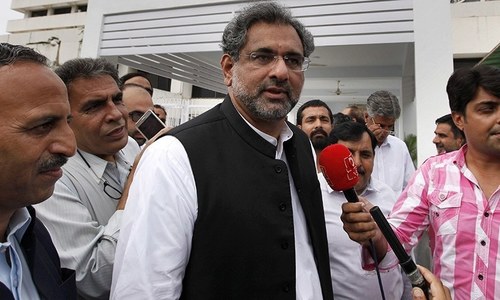
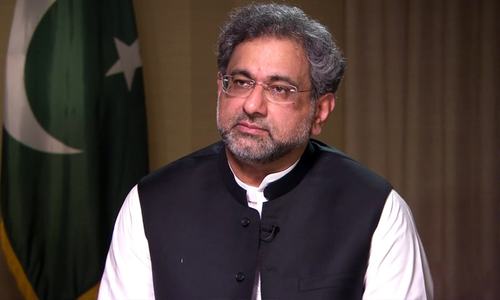
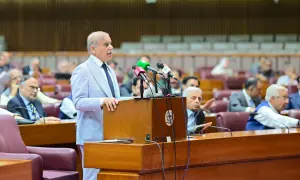
Pakistan is no more reliant on the United States for military requirements and will reach out to others if one source [of military supplies] dries up, Prime Minister Shahid Khaqan Abbas said in an interview with the Arab News on Sunday.
"If one source dries up, we have no option but to go to another source. It may cost more, it may consume more resources, but we have to fight that war, and that’s what we emphasised to all the people that we met," said the PM. "We have major US weapons systems in our military, but we’ve also diversified. We have Chinese and European systems. Recently, for the first time we inducted Russian attack helicopters."
Reiterating his stance on Pakistan's fight against terrorism, Abbasi said that the world needs to recognise the country's efforts. "Any sanctions or restraints […] put on our systems only degrades our efforts to fight terror, and it affects the whole equation in this region," he was quoted as saying.
Speaking about his "unscheduled" meetings on the sidelines of the United Nations General Assembly (UNGA), he said that they were held on the request of the US administration and proved to be "very constructive".
Abbasi’s meeting with VP Pence was the highest contact between the two sides since Trump's new policy was announced on Aug 21. Pakistan had after the policy announcement postponed the then planned bilateral interactions.
Read: Rocky Pak-US ties?
"Whatever concerns they [the US] have, we’ve shown our willingness to address those concerns,” Abbasi said about his meeting with US Vice President Mike Pence.
"We can categorically state that we don’t provide any sanctuaries to anybody," he said, refuting repeated US allegations of terrorist sanctuaries in Pakistan. "Today we have a common objective: to destroy terror and bring peace to Afghanistan."
'No role for India'
"We don’t believe that injecting India into the Pakistan-US relationship will help resolve anything, especially in Afghanistan, where we don’t see any role for India."
"The reality today is that much of the area bordering Pakistan is controlled by the Taliban," Abbasi said, adding that terrorists from Afghanistan carry out attacks in Pakistan which is why Pakistan was fencing its western borders.
"Whatever happens in Afghanistan, affects us. Whatever happens here, affects them."
'Pakistan will not go to IMF'
While speaking to the Arab News on the economic challenges the country is facing, the prime minister said that Pakistan will neither reach out to the International Monetary Fund (IMF), nor devalue its currency.
He conceded that declining reserves is a serious issue but said that Pakistan will look to solve it within its own resources. "I don’t think the IMF program is something that we intend to pursue."
Abbasi also accepted that falling exports and rising imports were widening the current account deficit but, he said, falling exports is a worldwide trend while the rise in imports "actually signals growth in the economy because the people have more money to spend on luxury goods."
Pinning economic hopes on the China-Pakistan Economic Corridor (CPEC), Abbasi said that the project will boost Pakistan's infrastructure which he termed "the basic ingredient" of any economy.
Read more: Exclusive: The CPEC plan for Pakistan’s digital future
"It’s really a game-changer and it will have multiplier effect. It will attract more investment, it will attract more projects. So, it’s really something that we feel will pay very high dividends for Pakistan."
According to the Arab News article, Abbasi rejected suggestions that large investments would give China undue influence in Pakistan. “It’s a two-way relationship,” he said.
He added that Pakistan does not see the CPEC as being "a threat of any kind". "They have equity investments here but mostly, it is debt or loans of some kind and it is basically focused on certain areas."
"Pakistan’s economy has the capacity to repay those loans. They have been targeted very carefully and the economic dividends will pay for more than the loans are worth. So, it’s an economic relationship in that sense."