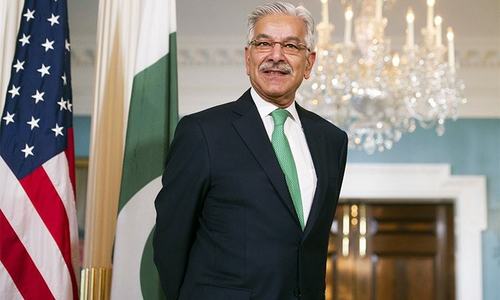
Responding to the reservations raised by US over the China-Pakistan Economic Corridor (CPEC), Islamabad on Saturday asserted that “CPEC is a development and connectivity project for the betterment of the people in the region and beyond”, and urged the international community to rather focus on the human rights violations committed by Indian forces in held Kashmir.
Earlier, the Trump administration had informed Congress that it too believes the CPEC passes through a disputed territory — originally an India claim aimed at thwarting the development plan.
The $56 billion CPEC passes through Pakistan’s northern areas, which India claims is part of the disputed Jammu and Kashmir territory.
Examine: CPEC and Kashmir issue
“The One Belt, One Road also goes through disputed territory, and I think that in itself shows the vulnerability of trying to establish that sort of a dictate,” US Defence Secretary James Mattis had told the Senate Armed Services Committee.
“The international community should focus on human rights violations and heinous crimes committed by Indian occupation forces in Indian occupied Kashmir,” read a statement issued by the Foreign Office on Saturday.
Secretary Mattis and Chairman Joint Chiefs of Staff Gen Joseph Dunford appeared before the Senate and House armed services panel earlier this week to brief US lawmakers on the current situation in the Pak-Afghan region.
Secretary Mattis said the US opposed the One Belt, One Road policy in principle because in a globalised world, there were many belts and many roads, and no one nation should put itself into a position of dictating One Belt, One Road. And it opposed the one going through Pakistan also because it passed through a disputed territory.
The new US position on CPEC will further strain already tense relations between the US and Pakistan, which also opposed the greater role Washington has assigned to India in Afghanistan in a strategy President Trump announced on Aug 21.
“As far as Afghanistan goes, as we try to separate out variables where, in some areas, we work with China, for example, terrorism — I think there are areas where we can work — find common ground with China when it comes to counterterrorism, and we should exercise those areas pretty fully,” said the US defence chief.
“But we should be under no illusions,” he warned. “There are areas where, also, strategically, we need to confront China where we think it’s unproductive — the direction they’re going in.”