REPUTATIONS are fragile constructs. Whether we’re talking about individuals, companies, countries or even cities, perceptions matter. Brands count. That’s why PR firms, image consultants and advertising companies do a roaring business across the world.
This week, I’ve had the European Union and Turkey on my mind. Not just because the relationship between the two continues to be troubled and turbulent.
My reflection started with what is now being called the “Catalan crisis” and its impact not just on Spain’s reputation as a democracy but also the implications of the vote on the EU’s image, both at home and abroad.
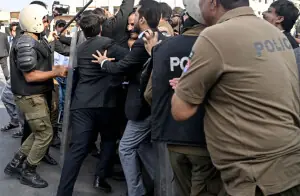
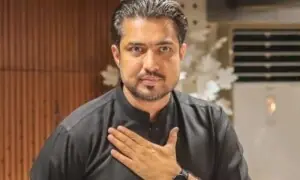
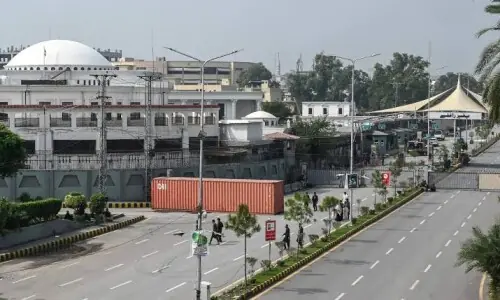
And then came disquieting news from Pakistan about the abduction by armed men of Mesut Kacmaz, former director of the Pak-Turk International Schools and Colleges, and his family which made me think of just quickly Turkey’s standing as a democratic nation, an inspiration for other Muslim countries, has taken a beating in recent years.
First, the EU. Brexit was a bad blow to the bloc’s reputation and confidence. But even as Britain prepared to leave, slowly and painfully, the EU27 bounced back with new projects and a renewed determination to make Europe count both at home and on the world stage.
Worrying violations of EU values in Hungary and Poland are being tackled through constitutional means, in keeping with the Lisbon Treaty.
But just as the going seemed to be getting better, with Europe finally forging ahead with the “wind in its sails”, the crisis triggered by Catalonia’s pro-independence referendum and questions raised about the shockingly harsh Spanish response to the vote have upset the cart.
The EU’s response so far to the explosive situation in Catalan has been stifled by concerns it might be seen as meddling in the internal affairs of one of its member states.
However, as the clock starts ticking towards a unilateral declaration of independence by the Catalan parliament, prompting fears of more bloody confrontation between Madrid and Barcelona, there are calls for external mediation to calm down tempers on both sides of the dispute.
The Catalan crisis has significant — and possibly devastating — repercussions on nationalism, democracy and politics in Europe.
The bottom line is this: can the EU be seen as credible in defending its values and preaching non-violent solutions to the rest of the world if it is seen as impotent when grappling with these issues at home?
Turkey’s international brand has also lost its shine. EU leaders meeting in Brussels on October 19 and 20 are scheduled to try and bring their relationship with Ankara back on a less hostile track following a summer of unprecedented anger and acrimony. But it won’t be easy.
Turkey’s relations with the EU — especially Germany — have been fragile for months. The EU’s deal with Turkey on controlling the flow of Syrian refugees to Europe notwithstanding, the bloc’s promise to open its doors to Turkey lies in tatters.
Negotiations on Turkey’s EU membership are at a standstill. Although the talks have not yet been broken off officially, the view in most European capitals is that Turkey no longer meets the EU’s political criteria for accession.
Turkish officials put the blame at Europe’s door. Europeans say it’s Ankara that is upending years of political and reform efforts. The situation has worsened since the failed coup attempt in July last year.
As Carnegie Europe’s visiting scholar Marc Pierini wrote recently, “Nearly 140,000 government employees have been dismissed, including members of the military, police, judges, and academics, while more than 50,000 people are in jail, among them many journalists, intellectuals, human rights activists and business people. More than 2,000 schools and universities have been shut down. Media have been closed. Businesses have been seized and their assets transferred to the state.”
Turkish President Recep Tayyip Erdogan has also made no secret of his dislike of the Pak-Turk Schools, which he accuses of having alleged links with Turkish cleric Fethullah Gulen, or his ‘Hizmet’ movement which the Turkish leader says was behind the failed coup.
While the Pakistan government has agreed to play ball — with new Pakistani Ambassador to Ankara Syrus Sajjad Qazi recently saying the government “will ensure that no stone is left unturned to deal with the problem and ensure that these people are no longer in Pakistan” — deporting the teacher and his family would be an unwise move.
First, given the current situation in Turkey, the teacher and his family will not be welcomed with open arms. They will almost certainly face imprisonment and possibly subjected to torture.
Second, while such a move would endear Islamabad to the Turkish president, it is unlikely to win Pakistan many friends among the millions of Turks who want a return to democracy and the rule of law in their country.
The Pakistani envoy also told the Anadolu Agency: “If something good happens to Turkey, it is the Pakistani heart that dances with joy.” Harassing, abducting and deporting law-abiding Turkish citizens in Pakistan will not make Turkey a better place or make Pakistanis happier. And it will certainly do nothing for the reputation of either Turkey — or Pakistan.
The writer is Dawn’s correspondent in Brussels
Published in Dawn, October 7th, 2017