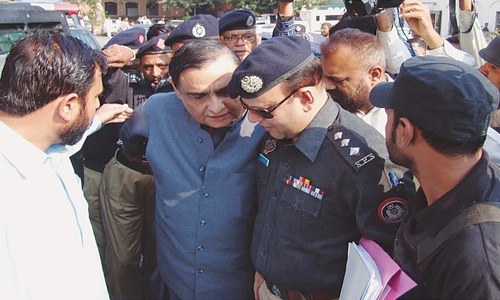
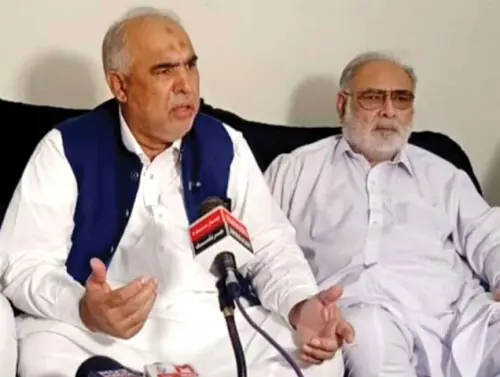
The Supreme Court on Tuesday ordered the removal of PPP leader Dr Asim Hussain's name from the Exit Control List (ECL), permitting him to travel abroad for a month to undergo medical treatment.
The decision was made after a three-member apex bench, headed by Justice Dost Muhammad Khan, heard arguments from Hussain's counsel, Barrister Latif Khosa. The SC ordered the Federal Investigation Agency, the Interior Ministry, immigration and other government institutions to remove Hussain's name from the ECL against a surety of Rs6 million to be submitted in the trial court.
The court further directed that his name should be placed on the list once he returns to Pakistan. The trail will continue in Hussain's absence.
In June, Hussain, a close aide of former president Asif Ali Zardari, had filed a petition in the SC asking for the removal of his name from the ECL so that he may travel abroad for treatment. The former minister has reportedly been undergoing treatment for a cardiovascular ailment.
As the SC began hearing the petition, the apex bench wondered why those accused of corrupt practices tend to suddenly fall sick.
Hussain, who was released from prison on the orders of the Sindh High Court in March after spending 19 months in detention, had been booked on the complaint of Rangers for allegedly treating and harbouring suspected terrorists at the North Nazimabad and Clifton branches of his hospital at the behest of some MQM and PPP leaders.
Corruption references had also been filed against the former minister by the National Accountability Bureau (NAB) for allegedly causing massive losses to the national exchequer through corrupt practices.
"We do not have any record of Dr Asim's illnesses from the past," Justice Dost had told Hussain's counsel during the hearing.
When asked about the charges against his client, Khosa told the court that Hussain had been accused of providing treatment to members of banned outfits at his hospital at the behest of MQM.
Justice Qazi Faez Isa, a member of the bench, questioned Khosa on what he meant by that the term "banned outfits".
"Even the interior ministry has been in contact with banned outfits," the justice remarked. "Did members of the Taliban receive treatment at [Hussain's] hospitals or members of the Lashkar-i-Jhangvi?"
During the hearing, the bench was also critical of NAB, accusing the bureau of making decisions based on personal preferences.
"Does NAB arrest criminals just to release them?" Justice Dost asked, adding that "some of the [bureau's] decisions come from other places."
"After receiving money from an interior minister, NAB issued plea bargains," the judge said, without specifying which interior minister he was referring to.
Reading out its decision, the court said that Hussain was treated discriminately when his name was put on the ECL.
"Religion and the Constitution call for the complete protection of human life," the court said.
"NAB's conduct was unfair," the bench said. "Several medical boards were formed for Hussain's diagnosis. According to these boards, his treatment was not possible in jail or in Pakistan."