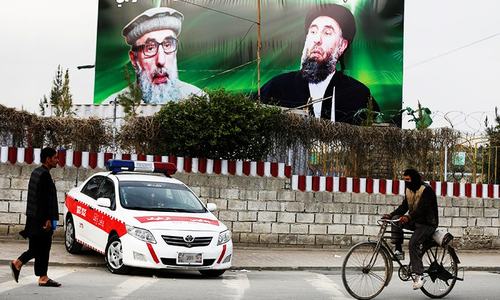
Afghan warlord and ex-prime minister Gulbuddin Hekmatyar rejected any increase in the United States (US) troops in Afghanistan on Saturday as he said elections were the only way to bring stability to the war-torn country.
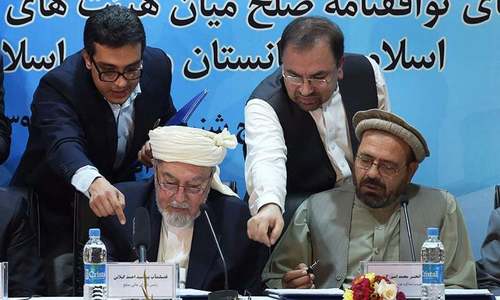
Hekmatyar is back in the political mainstream after returning to Afghan public life in April due to a landmark, but hugely controversial, peace deal he signed with the Kabul government.
The 70-year-old told reporters that Afghanistan desperately needed “a strong central government led by a powerful president”.
“Without this, it is impossible to bring peace and stability to the country,” he said, in his first press conference with foreign media since returning to Afghanistan after more than twenty years in exile.
“Hezb-i-Islami is ready to co-operate with the government and bring in security and stability unconditionally,” Hekmatyar said, referring to the largely dormant militant group he heads.
“We accept that elections should be the only way to get to power and the participation of political parties in elections is the only way forward,” he added.
Hekmatyar, white-bearded and wearing his trademark black turban, also said that Donald Trump would be wrong to send more American troops to Afghanistan, something the US president is believed to be considering. America has about 8,400 soldiers in the country, well below their presence of more than 100,000 six years ago.
“The current war cannot be won by increasing the number of foreign troops,” said Hekmatyar. “We want the international community to help Afghans stop foreigners and neighbours from interfering,” he added.
Hekmatyar is one of the several controversial figures that Kabul has sought to reintegrate in the post-Taliban era. General Abdul Rashid Dostum, another warlord, is Afghanistan's first vice president. The peace deal Hekmatyar signed with Kabul in September, in return for judicial immunity, was Afghanistan's first such agreement since the Taliban launched their insurgency in 2001.
It marked a symbolic victory for President Ashraf Ghani, who has struggled to revive peace talks with the more powerful Taliban. But it has angered human rights groups and Kabul residents who survived the civil war.
Hekmatyar, a prominent anti-Soviet commander in the 1980s, fled Afghanistan as the Taliban took power in 1996. During his exile, he was believed to be in hiding in Iran and perhaps Pakistan, but his group claimed he remained in Afghanistan.
Afghan civilian deaths are at their worst since records began in 2009 as the country's beleaguered security forces battle the Taliban and the militant Islamic State (IS) group.
Hekmatyar dismissed fears that IS fighters, on the back foot in Iraq and Syria, were arriving in Afghanistan. “The Daesh (IS) fighters in Afghanistan used to be with the Taliban,” he claimed, adding that they had just changed the flag they were fighting under.