5
5

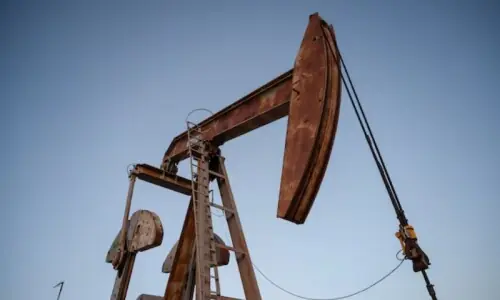
Chinese, French and Iranian energy giants signed a $4.8 billion deal to develop the world’s largest natural gas reserve in the Persian Gulf last Monday.
The parties — China National Petroleum Corp, France’s Total and the National Iranian Oil Co through its Petropars subsidiarywill develop the South Pars gas field, the first major energy investment since sanctions against Iran were lifted early last year. Production is to begin within 40 months, according to the agreement.
The French company will have a 50.1 per cent interest, with CNPC owning 30pc and Petropars 19.9pc.
As China’s biggest oil and gas producer, CNPC “can provide experience in gas development, needed investment and access to the Chinese market for this project”, said Wang Lu, an analyst from Bloomberg Intelligence.
The investment could further diversify China’s import sources and secure the country’s natural gas supply, he said.
China aims to raise the share of gas in primary energy consumption to a range of 8.3pc to 10pc in 2020, from 5.9pc in 2015, Wang said. He added that China will rely more on gas imports to achieve the target.
CNPC said it was finalising details with the Iranian side.
Iran’s Petroleum Minister Bijan Namdar Zanganeh said the country’s oil industry needs some $200bn in investment over the next five years. The country, with its 33.5 trillion cubic meters of proven reserves, ranks first in the world, according to BP.
According to the International Energy Agency, the South Pars field holds an estimated 51tr cubic meters of gas. It accounts for approximately 19pc of the world’s total gas reserve.
“Iran’s crude oil supplies to China have remained consistent and fairly stable,” said Oceana Zhou, an analyst at S&P Global Platts.
With the new deal, China and Iran are expected to further enhance cooperation in the energy sector, Zhou said. “This is a mutually beneficial relationship, as Iran needs international partners to develop both its upstream and refining sector.”
Challenges also exist, including “geopolitical risks and currency instability”, said Liang Jin, manager of natural gas department at Beijing-based JLC Network Technology Co.
“Offshore investments are often exposed to these challenges, especially in Iran. But the transcontinental collaboration will, to some extent, lower project risks and present an irresistible opportunity for all parties,” she said.
Asked the reasons behind Chinese energy giants’ overseas expansion, Zhou said: “They are investing in foreign upstream projects with the aim of establishing themselves as international companies and upgrading their profiles.
“Energy security concerns are weaker now with the ample availability of oil and access to resources.” n
China Daily/ANN
Published in Dawn, The Business and Finance Weekly, July 10th, 2017