
LAHORE: “My father was not very social and had a limited circle. My mother told us everything about him. She was not only his wife but also his great fan and critic.”
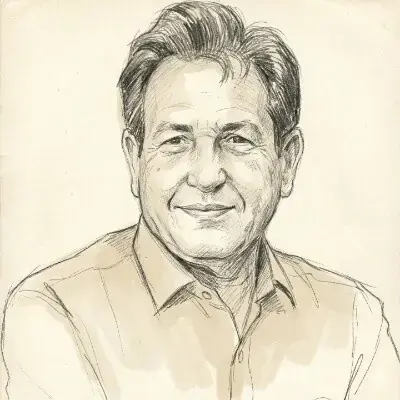
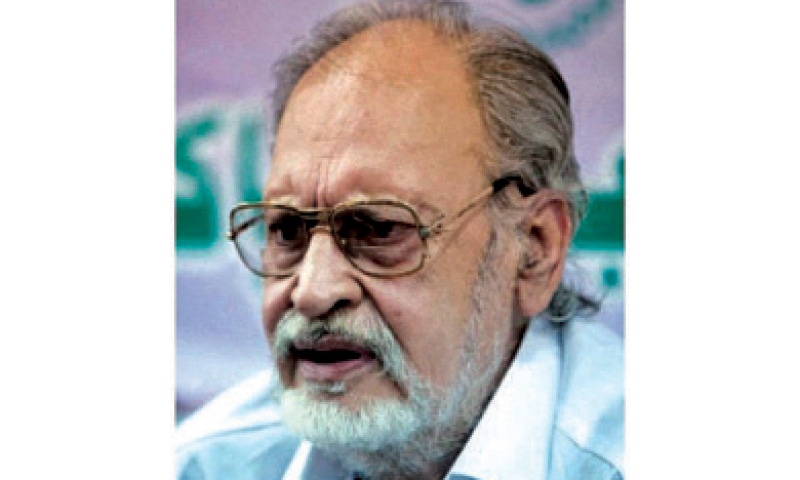
These views were expressed by Nur Fatima, daughter of renowned novelist Abdullah Hussein, while presiding over an evening held to commemorate the 2nd death anniversary of her father on Saturday evening ( July 8) at the Pak Tea House organised by the Progressive Writers Association (PWA), Lahore.
She went onto reminisce about her memories of her father saying that her mother first saw her father when she was eight and he was 11-year-old and what she admired about him was his quick wit. Her mother still has about 100 love letters from her father which even have whole passages copied from Hussein’s masterpiece Udas Naslein. She wondered how her father could know so much at the age of 33 when Udas Naslein was published.
She said his education for his children was far ahead of his time and that his greatest gift [to his children] was a liberal imagination; not to judge anyone or to let society or morality dictate you.
The function was also addressed by Raza Naeem, who has written an introduction to the reissued edition of Hussein’s translation of Udas Naslein, ‘The Weary Generations’, Punjabi novelist Zahid Hassan and prominent [literary] critic Dr Amjad Tufail. Naeem is also translating another of Hussein’s novels, Qaid (captivity) into English.
Naeem, who is also president of PWA in Lahore, said Udas Naslein is usually considered as one of the quintessential Partition novels, but it is also a love letter to rural, rustic Punjab, with lovingly elaborate depictions of the region’s customs and traditions, both jovial and brutal; and is also a reliable and unmatched catalogue of some of our seminal national historic events which are taught as little more than footnotes in the Pakistani curriculum.
He also talked about Hussein’s ‘little-known’ novel Qaid published in 1989, where in a 100-odd pages, Hussein summarises what Zia gifted to Pakistan women during and after his regime – shame, humiliation, torture, punishment and a raft of laws against them which even successive democratic governments have been loath to change or repeal. He said he found Qaid to be a more powerful and convincing dissection of patriarchy and the [toxic] nexus between religion and politics than in any other novel, written in the same period of dictatorship, but in English. He hoped that the70th anniversary of the Partition would give a new life to Udaas Naslein and its recently-reissued English variant; as well as the appearance of Hussein’s upcoming English novel The Afghan Girl and the Pakistan Academy of Letters’ decision to commission an English translation of his favourite among his own novels Baagh.
Zahid Hassan gave his talk in Punjabi and said that Hussein used to lament that he had become limited to [the writer of] just Udaas Naslein. One of Hussein’s short stories ‘Muhajireen’ is unique in Urdu literature, while in another story ‘Jilawatan’, Hussein has created a very unusual character.
Hassan said it is inaccurate to say that no work has been done on Abdullah Hussein; a lot has been done after his death, especially his novel Baagh. He gave reference of a survey done in India on Urdu novels while Quratulain Hyder and Intizar Husain were alive, and Udaas Naslein was voted as the best novel.
Dr Tufail shared memories of his meetings with Hussein. He said his earliest meeting with Hussein was in the 1980s. There were a very few personal references of meetings with him, however the real and important references were the creations of Abdullah Hussein. Tufail said he was inspired by the fact that all his life Hussein wrote nothing except creative prose; he was least interested in [attending] literary events, never wrote columns in newspapers or presented critical articles on others. He said he looked at Udaas Naslein and Nadaar Log in the same perspective. One thing which Hussein added in Nadaar Log, which was far ahead of the time and totally new for the Urdu reader, was the blending of non-fictional elements with fiction, especially his description of the bhatta (kiln) workers and the inclusion of the Hamoodur Rahman Commission Report.
Published in Dawn, July 10th, 2017