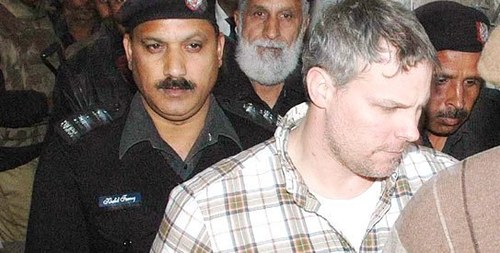
It was a violent episode, the first of three in the span of less than a year that plunged relations with the US to a fresh low.
And like the raid that killed Osama bin Laden and the Salala incident later in the year, there are few facts that are publicly known about who Raymond Davis was, what he was doing in Pakistan and what were the circumstances in which he was allowed to leave Pakistan.
Related: Victims’ relatives coerced into accepting blood money, says Davis
Now, in a book that has reopened an ugly chapter in this country’s recent history, Mr Davis has made a number of claims. The claims are difficult to verify and often appear to be outside the realm of knowledge a self-proclaimed security contractor could have about high-level Pakistan-US discussions.
Moreover, the book cannot be taken as a complete account of what occurred because some details will undoubtedly have been removed by US government censors who authorised the book’s publication. But the book itself is a reminder of how opaque Pakistan-US security relations have been and perhaps continue to be.
The Davis incident did not occur in a vacuum. At the time, there had already been a series of accusations traded between the political government and the security establishment about a significant increase in US intelligence operatives inside Pakistan.
President Asif Zardari and the then ambassador to the US Husain Haqqani were routinely accused by sections of the media of facilitating a so-called spy surge in a murky quid pro quo. Americans in particular and foreigners in general were routinely regarded as possible spies. Yet, security cooperation was believed to be continuing, drone strikes were occurring regularly and the US-led war effort in Afghanistan continued to be supplied through Pakistani routes.
A new era of relations that had been forged in secrecy by then president Gen Pervez Musharraf in the aftermath of the 9/11 attacks had become so distorted and convoluted under the unnecessary continuing cloak of secrecy that it had become difficult to separate fact from fiction.
The problem with the secrecy then and the secrecy now is that it is impossible to know whether the genuine national interests of the country are being protected at all times.
Raymond Davis’s account of his exit from the country suggests a range of Pakistani officials bent over backwards to ensure his release, a plausible account after then US president Barack Obama himself had demanded his release. What it does not reveal is whether Pakistani military and government officials were arm-twisted and what were the parameters of the debate surrounding Mr Davis’s possible release inside Pakistani policymaking circles.
The officials involved should come forward and clarify their positions themselves. That may help dispel lingering suspicions that the Davis incident was not resolved in good faith.
Published in Dawn, July 3rd, 2017