Plastic pollution poses serious threat to marine life


 0
0


KARACHI: How polluted our sea has become was indicated on Thursday when fishermen at sea around 270km south of Karachi caught a flat needlefish stuck in the handle of a plastic cup in their catch, the World Wide Fund for Nature-Pakistan (WWF-P) reported.
According to the organisation, fisherman Momin Khan took the fish on board with the aim to release it back into the water, but it died when he attempted to do so.
“Continued dumping of plastic products in the terrestrial and marine environment has become a serious threat to animals and plants inhabiting coastal and offshore waters of Pakistan. There is a dire need for efforts to control this pollution,” said Mohammed Moazzam Khan, technical adviser on marine fisheries at WWF-P.
Plastic pollution, he pointed out, was also contributed through flotsam (debris not deliberately thrown overboard) and jetsam (debris thrown overboard by a crew of ship in distress) generated from ships, including fishing vessels operating in the sea.
“Floating plastic is mistaken as food and many animals get entangled or stuck in such stuff with serious, often deadly consequences. High concentrations of plastic material, particularly plastic bags, restrict breathing of marine species, such as whales, dolphins, seals, seabirds, and turtles,” he said.
It had been reported that globally one out of three marine mammals were found entangled in plastic litter, he added.
Studies initiated by WWF-P show that on beaches such as Clifton, plastic pollution contributes up to 50 per cent of beached garbage. Now, even remote beaches along Pakistan’s coast, including Kund Malir and Gwadar, are littered with plastic, which is affecting marine life, including sea birds along coastal and offshore waters.
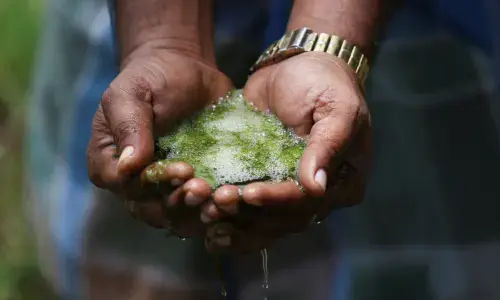
According to some estimates, around 6.4 million tonnes of trash, which mostly contains plastic, is dumped in the world’s oceans every year. Around 90pc of sea birds take in plastic. Fish and other animals are also not spared as they consume microplastic or become entangled in plastic debris.
If plastic bags, bottles, toys and packaging material are not disposed of properly, they reach the sea and damage coastal ecosystems. Plastic waste, which decomposes very slowly, remains floating in the open sea or piles up on beaches.
Senior director programmes at WWF-P Rab Nawaz called upon the local administration to ensure proper waste collection and disposal, especially in the coastal areas like Ibrahim Hyderi.
“There is also a need for creating public awareness of how to ensure minimum use of plastic in daily life and also promote use of recyclable material instead of plastic, a persistent chemical which takes hundreds of years [to decompose].
“Accumulation of plastic in the ecosystem, especially along the coast and in the offshore waters, poses serious threat to marine biodiversity,” he said.
Published in Dawn, June 24th, 2017