The National Database Registration Authority (Nadra) has 'vehemently' denied that its database was ever being shared with any country or entity in a statement released by the authority Friday.
In the statement, which followed a Twitter retweet of a 2009 cable leaked by WikiLeaks, Nadra claimed to possess very strong internal security control mechanisms that prevent any individual from permitting to or causing to share the database.
It claimed to have never compromised on the security of the citizens’ data. "No outsourcing was ever done at the expense of national security," the Nadra statement read.
"It is pertinent to mention that such kind of misguided revelations can severely affect the international business that Nadra is undertaking and strengthen its competitors," Nadra claimed in the statement.
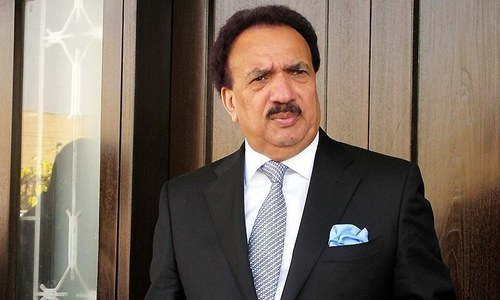
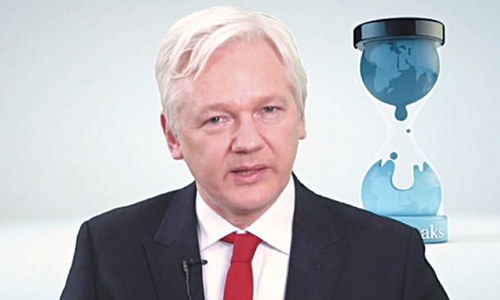
Earlier, WikiLeaks had tweeted a 2009 cable containing an account of meetings between former US Department of Homeland Security secretary Janet Napolitano and top Pakistan officials, including then prime minister Yousuf Raza Gillani and interior minister Rehman Malik.
The tweet referred to a cable which stated that: "Both PM Gilani and Interior Minister Malik pointed out that the National Data Registration Agency [...] already collects a wide spectrum of information on Pakistani citizens, from driving records to DNA."
According to the cable, Rehman Malik had "offered to share NADRA-generated information on Pakistani citizens, within the constraints imposed by privacy concerns."
The then interior minister had also suggested the sharing of Advance Passenger Information (API) and Passenger Name Records (PNR) of Pakistanis travelling to the US.
"The system is currently connected through passport data, but the GOP is adding voice and facial recognition capability and has installed a pilot biometrics system at the Chaman border crossing, where 30-35,000 people cross each day." The cable had reported Rehman as saying.
Rehman Malik had welcomed the arrival of a Department of Homeland Security (DHS) team to discuss PNR and had "agreed to set up a joint U.S.-Pakistan task force to work out a way forward," according to the cable.
The tweet, sent out in reference to a recently-leaked National Security Agency (NSA) report on the Russian cyberattack during US election, had stirred a controversy in Pakistan, prompting Malik to not only deny the allegations but also call for an judicial commission to probe the WikiLeaks claim.
Calling the report “totally baseless, fictitious and fabricated”, he had denied giving any country access to Nadra records, a claim now reiterated by Nadra itself.