Pakistan elected chair of WHO Executive Board

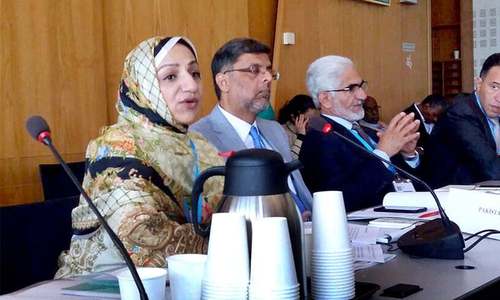
In a major development, Pakistan was elected chair of the World Health Organisation (WHO) Executive Board on Friday in Geneva, with Director General Health Dr Asad Hafeez formally assuming office as chairman of the board.
The 34-member elite group ─ which is considered the highest global policy forum on health ─ elected Pakistan as its chair during its 141st session held on June 1, with 22 votes in favour of Pakistan.
The executive board is composed of 34 individuals technically qualified in the field of health, each one designated by a member state.
The WHO's executive board meets at least twice a year. The annual board meeting is held in January when the member countries agree upon the agenda for the World Health Assembly and the resolutions to be considered by the assembly with a second shorter meeting in May, immediately after the Health Assembly.
The main functions of the executive board are to advise and facilitate the World Health Assembly and to give effect to the decisions and policies of the Health Assembly comprising 194 member countries.
The election is a two-tier process. The first phase was held at a regional level whereas a global forum was part of the final phase.
Pakistan was initially elected by a group of 22 countries making up the Eastern Mediterranean Region and later at the global forum by the executive board.
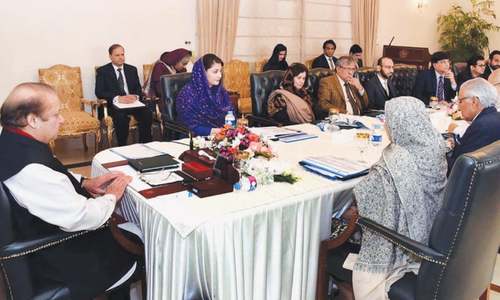
Commenting on the development, Minister for National Health Services Saira Afzal Tarar congratulated the nation and said it was indeed a great honour for Pakistan.
She termed it the recognition of the important role Pakistan has been playing in the global health arena.
She said Pakistan had been chosen earlier as the host of a prestigious regional conference of health ministers being held in October that will bring together participants from 22 countries in South Asia, Middle East, West Asia and North Africa.
Pakistan has previously served as vice-chair of the executive board and is also a member of the board of the Global Alliance for Vaccines and Immunisation, the minister added.